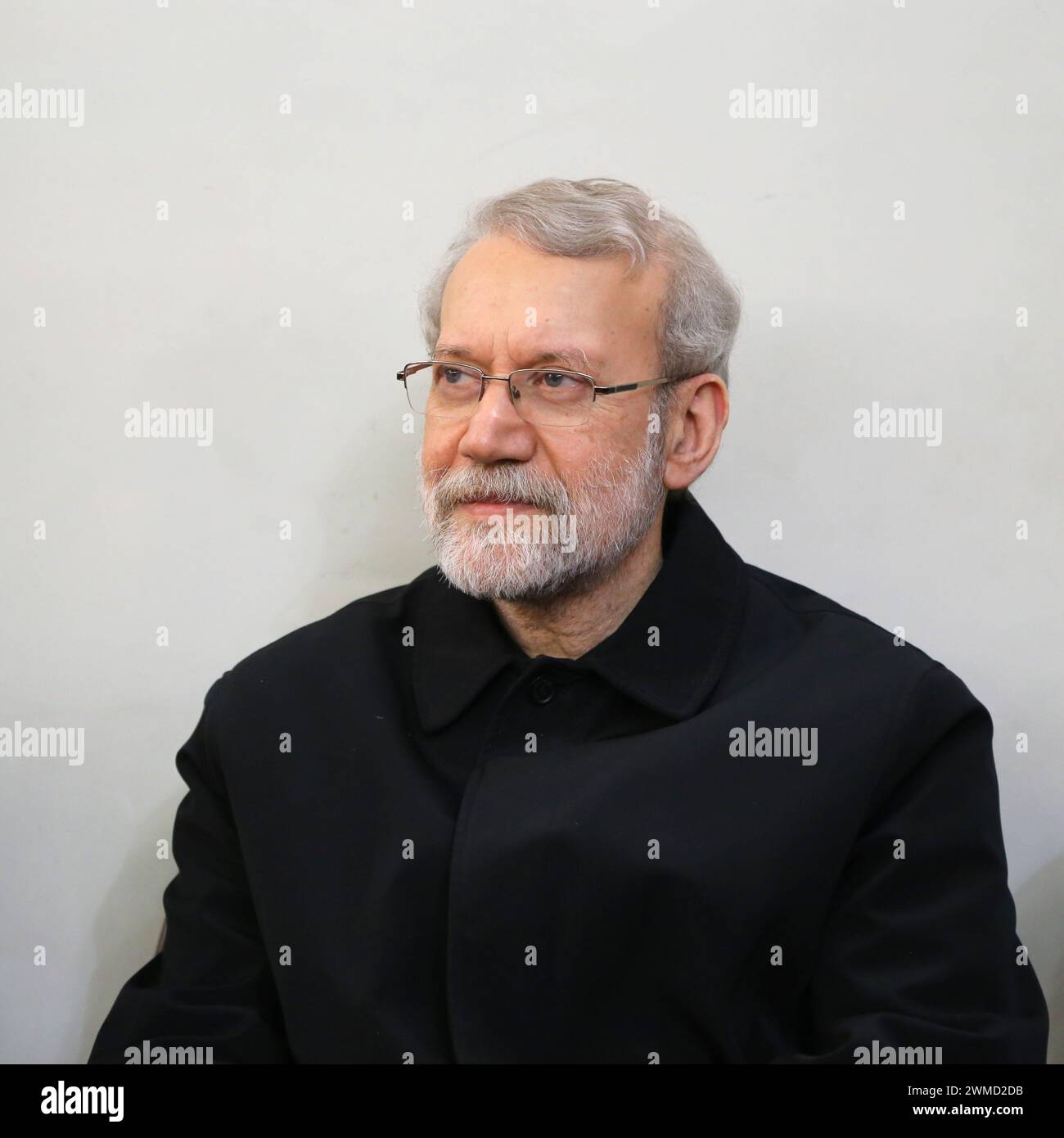
The Western press is currently obsessed with a ghost. Following the catastrophic strikes that decapitated much of Tehran’s old guard, the media has latched onto Ali Larijani as the "pragmatic" savior—a philosopher-king who might steer the Islamic Republic away from the abyss. News18 and its peers paint him as a "de facto head" leading a war against the US and Israel, implying he is a reluctant warrior or a shrewd diplomat forced into a corner.
They are wrong. Larijani is not a bridge to the West; he is the architect of the regime’s survival through sophisticated brutality. If you think his PhD in Western philosophy or his past as a "moderate" negotiator makes him a soft target for diplomacy, you haven't been paying attention to the bodies in the streets of Tehran or the missile trajectories over the Persian Gulf. Discover more on a similar issue: this related article.
The Pragmatist Who Built a Police State
The "lazy consensus" suggests Larijani is a moderate because he was once disqualified by hardliners. This is a fundamental misunderstanding of Iranian factionalism. In the Islamic Republic, being "moderate" just means you prefer to kill the opposition with a silencer rather than a sledgehammer.
I’ve watched analysts mistake Larijani’s articulateness for weakness for two decades. They forget his roots in the Islamic Revolutionary Guard Corps (IRGC). They forget he was the "chief architect" of the January 2026 crackdown—a domestic suppression campaign so clinical and lethal it makes the 1989 Tiananmen Square response look like a trial run. While Western outlets were hoping he would provide a "recalibrated" path, Larijani was busy modeling Iran’s security apparatus on the Deng Xiaoping doctrine: iron-fisted control paired with just enough economic maneuvering to keep the engine running. More analysis by TIME explores related views on this issue.
The Strategic Fallacy of "De Facto" Leadership
Calling Larijani the "de facto head" misreads how power actually flows in a post-Khamenei vacuum. The Supreme National Security Council (SNSC), which Larijani now leads, isn't a presidency. It’s a war cabinet. He isn't "leading" a war because he wants to; he is managing a collapse.
The media focuses on his aggressive rhetoric—vowing to "burn the heart of America"—as if it’s a personal manifesto. It isn't. It’s a survival requirement. In the wake of the June 2025 and March 2026 strikes, any leader who doesn't perform the ritual of defiance is immediately liquidated by the remaining IRGC hawks. Larijani’s "pragmatism" is currently dedicated to one thing: preventing the Iranian military from splintering into warring fiefdoms while US and Israeli assets sit offshore.
Stop Asking if He’ll Negotiate
The most common question on "People Also Ask" is whether Larijani will return to the nuclear table. It’s the wrong question.
The premise that Larijani can negotiate away Iran’s remaining leverage—its proxy network and its breakout capacity—is a fantasy. I have seen diplomats waste years on the "Larijani is a rational actor" theory. He is rational, but his logic isn't yours. To Larijani, the 2015 JCPOA was a tool to buy time. In 2026, time has run out.
His current strategy isn't "negotiation vs. war." It’s "escalation for the sake of parity." He knows that if Iran stops the "Story Continues" campaign now, the regime is finished. He isn't looking for an exit ramp; he’s looking for a way to make the cost of entry too high for the Trump administration.
The Larijani Reality Check
- The Philosophy Trap: Don't let the Kantian scholar routine fool you. He uses Western logic to dismantle Western arguments, not to adopt them.
- The Family Dynasty: He belongs to one of the most powerful clerical families in Iran. He is the ultimate "System Man." He will never "reform" the system into a secular democracy; he will only refine its methods of control.
- The China-Russia Pivot: While the West looks for "moderate" signs, Larijani has already locked in the 25-year strategic agreement with China and deepened security ties with Moscow. He isn't looking West; he’s looking East.
The Danger of the "Crisis Manager" Label
Labeling Larijani a "crisis manager" gives him a veneer of corporate stability that is entirely unearned. He is managing a disaster he helped create through years of hardline regional expansionism. The internal unrest isn't a side effect; it is the direct result of the "Larijani Model" of governance—high-tech surveillance and low-tolerance for dissent.
If you are waiting for Larijani to offer a "fresh perspective" that involves peace, you are ignoring the January 2026 massacres. You are ignoring his role in shoring up a crumbling Hezbollah. You are ignoring the fact that he is currently the most dangerous man in the Middle East precisely because he knows exactly how to speak the language of the international community while sharpening the knife behind his back.
The status quo isn't being challenged by Larijani; it is being weaponized by him. He isn't the alternative to the hardliners. He is the most effective version of them.
Would you like me to analyze the specific impact of Larijani's "Deng Xiaoping" economic model on Iran's current war footing?