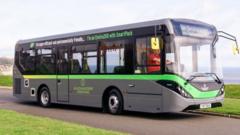
The news that Alexander Dennis is pulling the plug on its Falkirk factory feels like a punch to the gut for Scottish manufacturing. We aren't just talking about a building closing its doors. We’re talking about 115 people losing their livelihoods and a century-old legacy of bus building being dismantled. It’s a messy, frustrating situation that's been brewing for years, and frankly, it's a textbook example of how not to protect a domestic industry.
If you’ve followed the headlines, you know the basic story. Alexander Dennis Limited (ADL), the UK’s biggest bus builder, is "consulting" on a plan to shut its Falkirk site. They want to move chassis production to their other facility in Larbert. On paper, they’re spinning this as a way to "safeguard" 200 other jobs that were already on the chopping block. But for the 115 workers in Falkirk, that’s cold comfort.
The Furlough That Failed to Bridge the Gap
Let’s be real about the politics here. Back in late 2025, the Scottish Government thought they’d saved the day. They threw a £4.1 million furlough scheme at ADL to stop them from packing up and moving everything to Scarborough in North Yorkshire. At the time, First Minister John Swinney visited the plant, shook some hands, and talked about a "bridge to a sustainable future."
It turns out that bridge didn't lead very far.
The furlough was supposed to buy time—26 weeks to be exact—to wait for new orders to roll in. And orders did come. Just last week, the Scottish Government bragged about the latest round of the Scottish Zero Emission Bus Challenge Fund (ScotZEB3). But when you look at where that money actually went, the picture gets ugly.
Why Chinese Buses are Winning in Scotland
You’d think a fund meant to "green" Scotland’s transport would naturally support Scottish jobs. You’d be wrong. In the most recent funding round, nearly half of the orders—166 buses—went to Yutong, a Chinese manufacturing giant. Alexander Dennis only walked away with 123.
This isn't an isolated incident. In 2025, over 51% of all zero-emission buses bought in the UK came from overseas. That’s a massive jump from just a year ago. Why? Because Chinese manufacturers can underbid UK firms every single time. They have massive state backing, lower labor costs, and a head start on battery tech.
The UK’s procurement rules are currently a mess. We’re using taxpayer money to buy cheaper buses from abroad while our own factories starve. Paul Davies, the MD of Alexander Dennis, has been screaming into the void about this "uneven playing field" for years. He’s right. When the government prioritizes the lowest sticker price over local economic impact, this is what you get: empty factories in Falkirk.
The Larbert Pivot
So, what’s the actual plan now? ADL says they’ll convert the Larbert site into a dedicated chassis manufacturing hub. They claim this will support their entire range of electric and hydrogen buses.
It’s a strategic retreat. By closing the "legacy" Falkirk site and consolidating at Larbert, they’re trying to lean out the operation to survive the onslaught of international competition. They’re keeping about 350 roles in Scotland total, but we’ve already lost roughly 85 people who just walked away during the months of uncertainty.
The Ripple Effect on Falkirk
You can't just remove 115 jobs from a town like Falkirk and expect everything to be fine. In manufacturing, there's a multiplier effect. For every person on that factory floor, there are three or four more jobs in the local supply chain—the people making the seats, the glass, the electronics.
Unite the Union is rightfully furious. They’re calling this a "hollowing out" of the Scottish industrial base. And it’s happening right next door to the Grangemouth refinery, which is also facing a grim future. Central Scotland is taking hit after hit, and the "Green Industrial Revolution" we were promised is starting to look like a lot of pink slips.
The Procurement Trap
The fundamental problem is that the UK’s Subsidy Control Act and current procurement laws don't reward "local content." If a council or a bus operator wants to buy a fleet, they’re often legally pushed toward the cheapest option. If the Chinese bus is 20% cheaper because of state subsidies in Beijing, the Scottish worker in Falkirk loses.
Kate Forbes and other SNP ministers are pointing the finger at Westminster, saying they need more powers to favor domestic firms. Meanwhile, the opposition is blaming the SNP for "overpromising and underdelivering" on the furlough deal.
The truth is, everyone's been too slow to act. While politicians were arguing over the fine print of subsidy rules, the market share for UK-built buses was evaporating.
What Happens Next?
The consultation period is now underway. Historically, these "consultations" rarely result in a total reversal of the decision. The best-case scenario is that some of those 115 workers can be absorbed into the new Larbert setup, but the Falkirk site itself is likely toast.
If you care about Scottish industry, this is the time to lean on your local representatives. We need a procurement policy that actually factors in the social and economic value of building things here.
Next Steps for the Industry:
- Demand a reform of the Subsidy Control Act to allow for "Buy British" or "Buy Scottish" incentives.
- Push for "social value" clauses in all public transport tenders to include local job creation.
- Keep a close eye on the Larbert transition to ensure the promised 350 jobs actually stay secure.
Ending the manufacture of bus bodies in Falkirk isn't just a corporate restructure; it’s a failure of industrial strategy. We're trading away high-skilled manufacturing for cheaper imports, and once those skills leave the community, they don't come back.