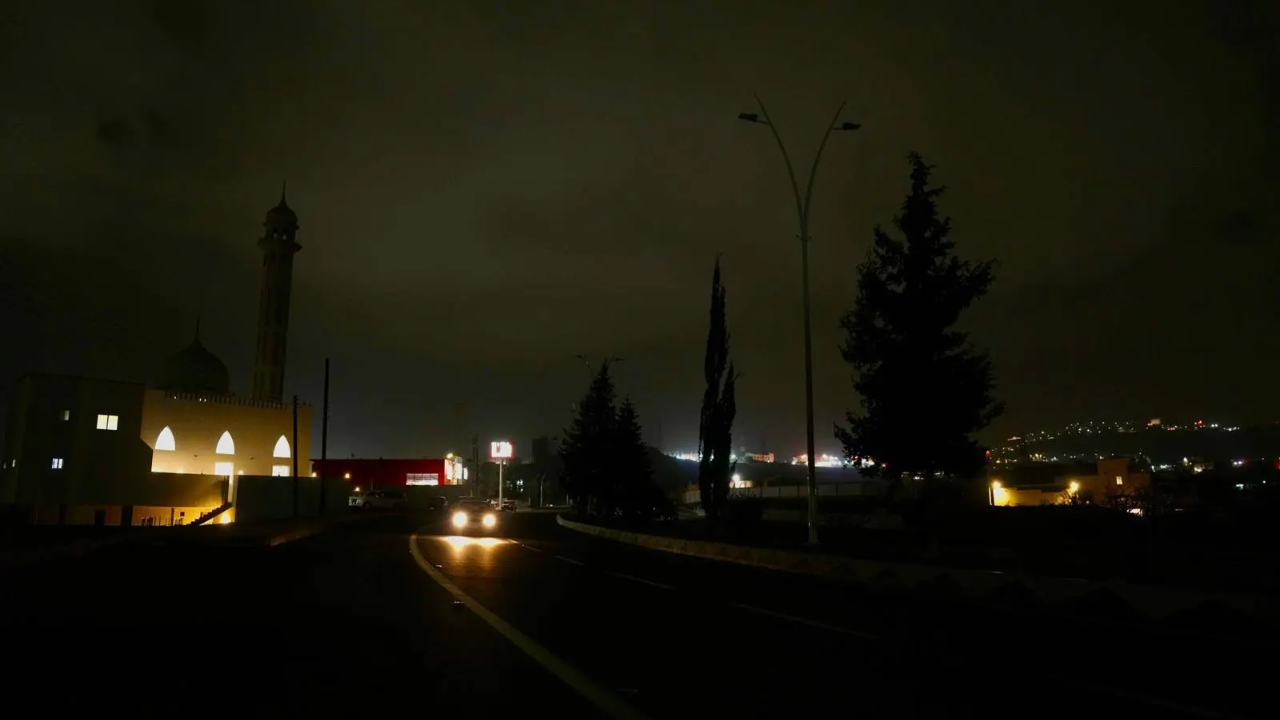
Saudi Arabia just pulled a move that caught most of the world off guard. While the global conversation usually centers around massive neon projects like NEON or the sprawling expansion of Riyadh, a quieter, darker experiment happened in the mountains. Al Baha went dark. For a full hour, the city deliberately cut its power to observe what local officials called the "green hour." It sounds like a simple symbolic gesture, something we've seen with Earth Hour for years, but this felt different. It was localized. It was aggressive. And it was deeply tied to a national identity shifting toward sustainability.
If you think this is just about saving a few riyals on the electric bill, you're missing the point. This wasn't a fluke or a random blackout. It was a calculated demonstration of how a modern city can decouple itself from the grid, even if just for sixty minutes, to prove a point about carbon footprints.
The Night the Mountains Went Silent
Al Baha isn't your typical Saudi desert town. It’s perched high in the Sarawat Mountains, known for its lush greenery and temperate climate. That makes it the perfect laboratory for environmental initiatives. During this green hour, streetlights flickered off. Public buildings went black. Commercial centers dimmed their displays. The goal was to cut carbon emissions in a tangible, measurable way.
I've seen these types of events before. Usually, they’re half-hearted. A few people light candles, but the rest of the city carries on as usual. In Al Baha, the participation felt institutional. The municipality didn't just ask people to join; they led the charge by cutting the juice to major infrastructure. It forced a conversation. When the lights go out, you notice the silence. You notice the stars. More importantly, you notice how much energy we waste on things we don't even look at.
The impact of such a move isn't just about the immediate reduction in $CO_2$ levels. It's about psychological priming. You can't ask a population to embrace a circular carbon economy if they've never felt the weight of their own consumption. This hour was a heavy, silent reminder.
Moving Beyond Symbolic Environmentalism
Critics often argue that "dark hours" are ineffective. They claim the surge in power when the lights come back on negates the savings. That’s mostly a myth. Modern grids handle these transitions much better than they used to. In Al Baha, the focus was on the broader Saudi Vision 2030 targets. The Kingdom wants to reach net-zero by 2060. To get there, they need more than just solar farms in the desert. They need a culture of conservation.
The Saudi Green Initiative is the engine behind this. It isn't just a white paper sitting in a government office in Riyadh. It’s a multi-billion dollar roadmap that includes planting 10 billion trees and raising the share of renewable energy to 50% by 2030. When Al Baha goes dark, it's a micro-level execution of that macro-level plan.
Think about the numbers for a second. Saudi Arabia is one of the world's highest per-capita consumers of electricity, largely due to air conditioning. While Al Baha enjoys cooler weather, the habit of keeping everything "on" is a national trait. Breaking that habit requires a shock to the system. Literally.
Why Al Baha is the Right Place for This
Location matters. If you did this in Jeddah during the summer, people would revolt within ten minutes as the humidity turned homes into saunas. Al Baha has the "cool" factor. Its high altitude means that for large parts of the year, you don't even need AC.
This gives the city a unique leverage. It can lead the country in residential energy efficiency because the stakes are lower for the individual, yet the data gathered is incredibly valuable for the Ministry of Energy. By monitoring the grid during this hour, engineers can see exactly where the "baseload" power is going. They can identify which neighborhoods are the biggest energy hogs. It’s a massive data-collection exercise disguised as a community event.
Lessons for Other Global Cities
What happened in Al Baha shouldn't stay there. Other cities in the Middle East—and frankly, in the West—could learn from this. Most "green" initiatives are passive. You pay a carbon tax you don't see. You buy a product with a "recyclable" label that probably ends up in a landfill. Al Baha’s approach is active. It requires everyone to stop what they're doing and acknowledge the environment.
What actually works in urban energy reduction
- Mandatory Participation: Voluntary programs usually fail to reach the 20% mark. By involving the municipality, Al Baha ensured a visible change.
- Timing: Choosing an hour when the impact on safety is low but the visual impact is high.
- Data Transparency: Following up with the public about how much energy was actually saved makes the effort feel real rather than performative.
I honestly think we’re going to see more of this. Not just because it’s "good for the planet," but because energy security is becoming a massive headache for every nation. If you can train your citizens to be comfortable with less, you’ve won half the battle.
The Reality of the Carbon Challenge
We have to be real about the scale. One hour in one city doesn't stop climate change. The global output of carbon is staggering. However, the Saudi approach is fascinating because it’s a top-down mandate meeting bottom-up participation. They’re trying to change the DNA of a country that was built on oil.
The Al Baha experiment is a signal. It tells the world that the Kingdom is serious about the Saudi Green Initiative. They’re willing to turn off the lights in their own cities to prove they mean business. It’s a gutsy move. It’s also a necessary one.
If you’re looking at your own carbon footprint, don't wait for a city-wide blackout. Start by auditing your own "vampire" power. Look at the devices that stay plugged in 24/7. Look at your lighting. Switch to LEDs if you haven't. It’s basic, but it’s where the real change starts. Al Baha proved that we can survive without the glow of the screen and the hum of the streetlamp. Maybe it’s time we all tried a little more darkness.
Stop waiting for a government mandate to change your habits. Audit your home energy use tonight. Flip the breaker on things you don't need. If an entire city can go dark to make a point, you can certainly turn off your gaming rig when you're not using it.