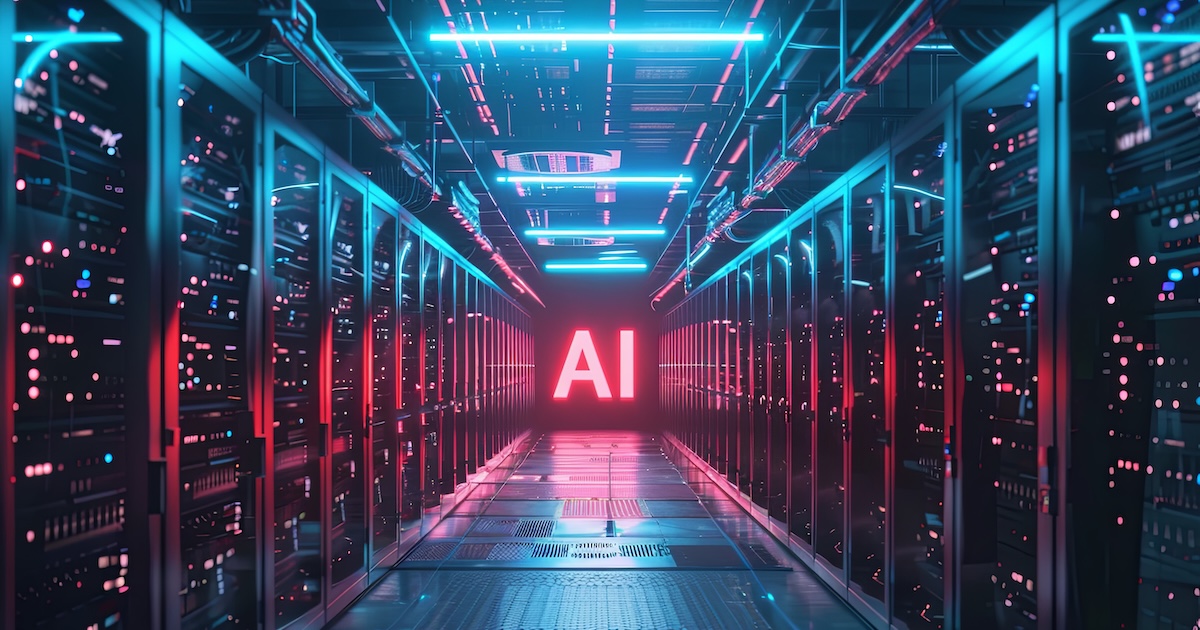
The physical footprint of the internet used to be invisible to most of us. You clicked a button, a cat video played, and the machinery humming in a windowless building three states away wasn't your problem. That's over. On Wednesday, Senator Bernie Sanders and Representative Alexandria Ocasio-Cortez introduced the AI Data Center Moratorium Act of 2026, a blunt-force legislative tool designed to freeze the construction of new data centers across the United States.
This isn't just about slowing down a few construction crews. It's a full-scale challenge to the Silicon Valley assumption that progress must happen at the speed of light, regardless of who pays the electric bill. If you've noticed your local utility rates creeping up or heard about "hyperscale" facilities gulping millions of gallons of water in drought-prone states, you're already living in the middle of this fight. Learn more on a connected topic: this related article.
The grid is screaming for a break
We’re moving toward a reality where AI is sold like water or electricity. OpenAI’s Sam Altman even recently floated a "pay-as-you-go" utility model for AI tokens. But here’s the problem: you can't treat AI like a utility when its physical infrastructure is currently cannibalizing our actual utilities.
A single AI-focused data center can consume as much electricity as 100,000 homes. In 2023, these facilities used about 4.4% of all U.S. electricity. By 2028, experts at Lawrence Berkeley National Laboratory expect that to hit 12%. That’s a staggering jump in five years. Additional reporting by Gizmodo highlights related views on this issue.
- Ratepayer pain: When a tech giant builds a massive facility, the local grid often needs expensive upgrades. Too often, those costs are passed down to you, the resident, rather than the billionaire-backed firm.
- Water shortages: In places like Texas, data centers are projected to use 399 billion gallons of water by 2030. For context, that’s like sucking 16 feet of depth out of Lake Mead in a single year.
- Carbon goals: We’re trying to hit net-zero, but AI infrastructure is running in the opposite direction. It’s resource-heavy, reliant on rare earth minerals, and often backed by diesel generators the size of train cars for "backup" power.
Why a federal pause actually makes sense
Critics call this bill a "surrender flag" to China. They argue that if we stop building, we lose the AI arms race. That’s a convenient narrative for companies with $41 billion already sunk into construction last year, but it ignores the "move fast and break things" wreckage left in the wake of previous tech booms.
The Sanders-AOC bill wants to hit the brakes until we have federal safeguards that actually mean something. This isn't just about environmental impact; it's about existential safety and economic survival. The bill demands a framework to prevent the release of "harmful products" and ensure that the wealth generated by these machines isn't hoarded by a handful of "Big Tech oligarchs."
It’s about giving democracy a chance to catch up. Right now, more than 100 local communities and 12 states are already trying to pass their own bans. They’re doing it because they’re the ones seeing the "data center alleys" destroy their local landscape and strain their resources. A federal moratorium would replace this chaotic patchwork with a national standard.
The China argument is a distraction
You’ll hear a lot of talk about "national security" from those opposing the moratorium. They’ll tell you that any delay is a win for Beijing. Honestly, it’s a tired play. Building more data centers doesn't automatically make AI safer or more useful for the average person.
If we build a million servers but bankrupt our power grid and dry up our aquifers to do it, have we actually won? True national security involves a stable power grid and a population that isn't being priced out of their own homes by surging utility costs.
What happens if the bill fails
Let's be real: this bill faces a steep uphill battle in a divided Congress. The Trump administration has already moved to preempt state-level AI regulations, preferring a lighter touch that favors rapid expansion.
But even if the federal moratorium doesn't pass today, the movement isn't going away. The "AI tsunami" has reached a point where the physical costs are too high to ignore. If the federal government won't act, expect more cities to follow the lead of places like Loudoun County or states like Pennsylvania, where local leaders are realizing that the "jobs" promised by data centers are often few and far between once the construction phase ends.
If you’re concerned about how this affects you, start by looking at your local zoning boards. That’s where the first line of defense is currently holding the line. Ask about the water-use agreements and who’s paying for the new substations. If we don't demand a pause now, we’re essentially giving tech companies a blank check signed with our own resources.
Practical Next Steps
- Check your local utility filings: See if your power provider is planning rate hikes tied to "industrial load growth" or "grid modernization" specifically for data center clusters.
- Support state-level transparency: Push for legislation that requires data centers to report their exact water and energy usage—data that many companies currently guard as trade secrets.
- Demand "Closed-Loop" cooling: If a data center is coming to your area, demand they use liquid immersion or closed-loop systems that don't evaporate millions of gallons of freshwater into the atmosphere.