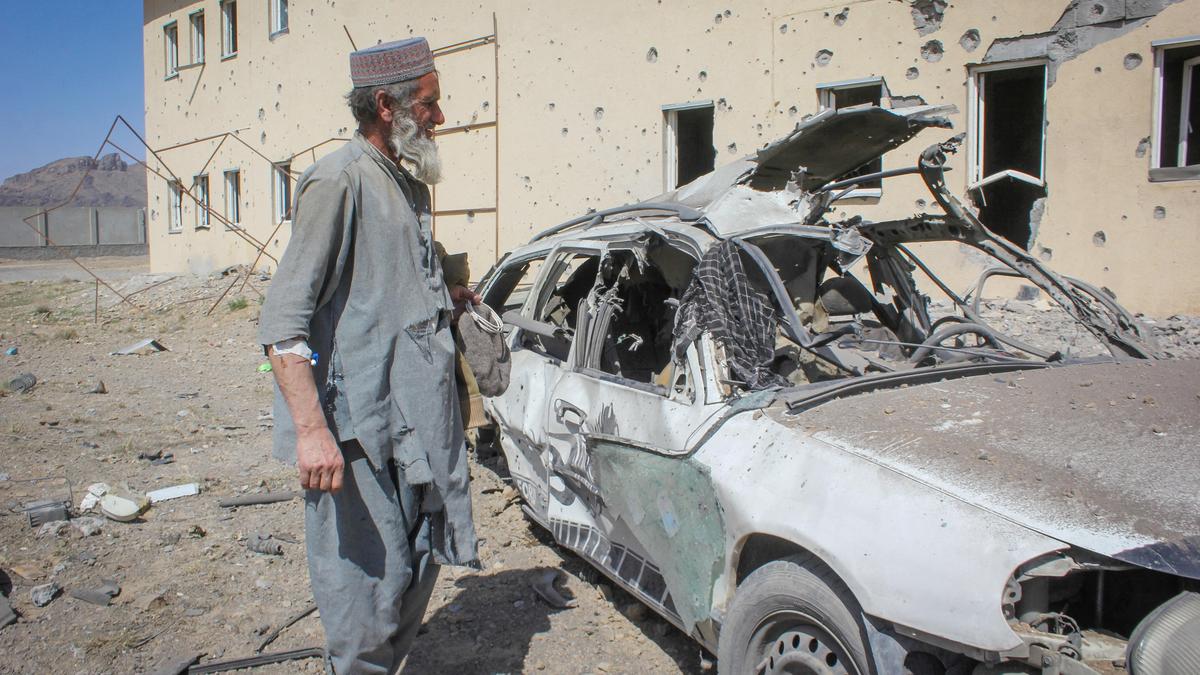
Numbers lie. When a government minister steps to a podium to announce that 67 Afghan Taliban personnel were neutralized in an overnight operation, the public is trained to see a scoreboard. They see a "win." They see "decisive action."
They are wrong.
The reported elimination of these fighters along the Durand Line isn't a sign of Pakistan’s burgeoning tactical superiority or a shift in the regional power balance. It is a loud, bloody confession that the decade-long policy of "strategic depth" has officially imploded. If you are celebrating 67 deaths, you are missing the fact that the border has become a sieve and the former "assets" are now the primary existential threat.
The Myth of the Surgical Strike
The standard narrative suggests these operations are clean, intelligence-driven, and final. This is a fantasy maintained for the sake of domestic morale. In reality, these kinetic engagements are reactive. They are "firefighting" in a building that has been soaked in gasoline for twenty years.
When 67 fighters are killed in a single night, it implies a massive breach of intelligence and border security long before the first shot was fired. How did 60-plus armed foreign combatants embed themselves deep enough to require an "overnight operation" of this scale?
The obsession with body counts is a relic of 20th-century warfare. In modern asymmetric conflict, a body count is a lagging indicator. It tells you where the enemy was, not how they are evolving. By focusing on the kill chain, the state ignores the supply chain—the social, economic, and ideological pipelines that will replace those 67 men by next Tuesday.
Why the Border Fence is a Billion-Dollar Paperweight
Pakistan spent massive resources and political capital fencing the 2,640km border with Afghanistan. The "consensus" was that physical barriers would solve the cross-border militancy problem.
It didn't.
Technology cannot fix a broken political reality. The Afghan Taliban, now the de facto government in Kabul, views the Durand Line as a colonial relic. To them, the fence is an annoyance, not a boundary. When the Pakistani military engages these groups, they aren't fighting "terrorists" in the vacuum-sealed way the West defines them. They are fighting a force that shares the same ethnic, linguistic, and religious DNA as the populations on the Pakistani side.
I have seen intelligence reports where the "enemy" disappeared into local villages not through coercion, but through genuine hospitality. You cannot shoot your way out of a demographic reality. The 67 deaths are a drop in the bucket compared to the radicalization occurring in the border-region madrasas that the state still refuses to regulate.
The "Good Taliban" vs "Bad Taliban" Delusion
For years, the Pakistani establishment operated on the convenient fiction that you could support the Afghan Taliban while fighting the Tehrik-i-Taliban Pakistan (TTP). This was the ultimate strategic blunder.
The distinction was always a mirage. They share commanders, they share safe houses, and most importantly, they share a victory narrative. The Afghan Taliban’s return to power in Kabul in 2021 was the greatest recruitment tool the TTP ever received.
Every time a Pakistani minister announces the killing of "Afghan Taliban personnel," they are admitting that the group they once shielded is now actively attacking them. It is the definition of a Frankenstein’s monster scenario. The "Bad Taliban" are just the "Good Taliban" with a different zip code.
The Intelligence Failure Behind the Kinetic Success
We are told these operations are "intelligence-led." If the intelligence were truly effective, the escalation wouldn't reach the point of a 67-person shootout.
True intelligence-led security focuses on:
- Financial Interdiction: Stopping the flow of illicit mining and smuggling revenue that pays for the ammunition.
- Digital Decapitation: Disrupting the encrypted communication channels used to coordinate cross-border raids.
- Community Decoupling: Providing enough economic incentive for border tribes to choose the state over the militants.
Instead, the state relies on "kinetic ops." Why? Because a pile of bodies is easier to show the press than a nuanced de-radicalization program or a complex financial investigation. It’s theater. It’s loud, it’s violent, and it’s ultimately ineffective.
The Data the Minister Won't Show You
If you want the truth about the security situation, stop looking at the number of "terrorists killed." Look at these metrics instead:
- The Officer-to-Soldier Casualty Ratio: In recent years, the TTP and its affiliates have become increasingly adept at targeting high-ranking officers. This indicates a sophisticated intelligence apparatus within the militant ranks.
- Weaponry Origin: Most of the gear recovered from these "67 personnel" is high-end, left-behind NATO equipment. Night-vision goggles and M4 rifles have leveled the playing field against the average Pakistani infantryman.
- Recruitment Lag-Time: How quickly are the ranks refilled? If the TTP can replace 60 men in a month, the operation was a failure.
Stop Asking "How Many Died?"
The public and the media are asking the wrong question. They ask, "Are we winning the war?" as if there is a finish line.
The real question is: "Is the state capable of governing the periphery?"
As long as the answer is no, these operations are just expensive, bloody maintenance. You are clearing a field that will grow weeds the moment you turn your back.
We are seeing the fallout of a policy that tried to use religious extremism as a tool of foreign policy. You can't keep snakes in your backyard and expect them only to bite your neighbors. Eventually, the sun goes down, and the snakes come for the person who fed them.
The Brutal Reality of Regional Isolation
By engaging in these heavy-handed overnight operations, Pakistan is also signaling its deteriorating relationship with Kabul. The "brotherly Islamic nation" rhetoric is dead. We are now in a state of undeclared border war with a regime we helped install.
The downside of my contrarian view? It’s bleak. There is no quick fix. There is no "one more operation" that will solve this. It requires a generational shift in how Pakistan views its Western border—not as a strategic buffer, but as a sovereign frontier that requires law, not just lead.
If the government thinks killing 67 people changes the math, they don't understand the equation. The equation is one of legitimacy, not lethality.
Turn off the news. Ignore the body counts. Watch the schools. Watch the markets. Watch the border crossings. That is where the war is being lost, regardless of how many militants are buried this morning.
Stop treating the symptom. The fever is 67 degrees higher today, and the doctor is still just trying to break the thermometer.


