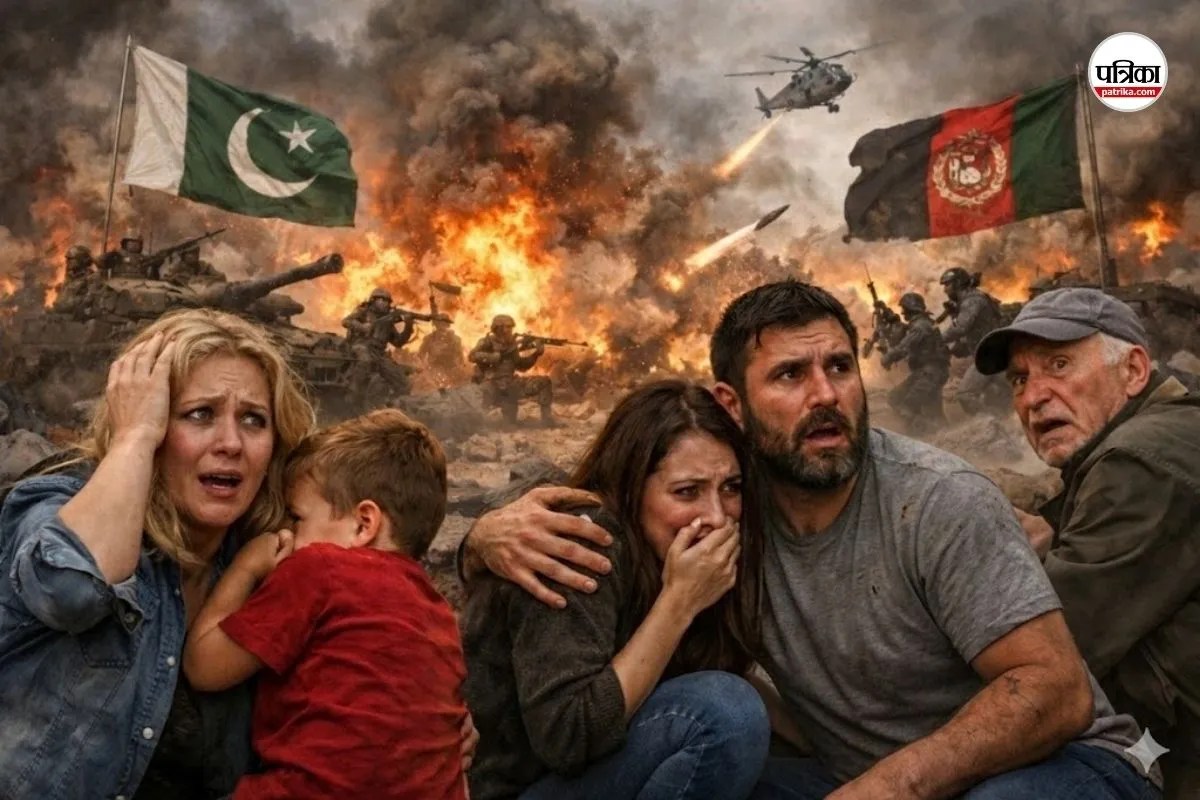
The escalating military friction between Pakistan and the Taliban-led administration in Afghanistan has moved beyond routine border skirmishes into a phase of sustained, high-stakes confrontation. While headlines often focus on the immediate exchange of fire, the underlying crisis involves a complete breakdown of the strategic depth policy that Pakistan spent decades cultivating. The recent advisory alerts issued to foreign nationals, particularly those from neighboring nations, are not merely precautionary measures. They are signals of a deepening instability that threatens to draw regional powers into a conflict no one is prepared to manage.
At the heart of the current volatility is the Durand Line. This 2,640-kilometer border, a relic of British colonial cartography, remains the primary source of friction. Islamabad views it as a settled international boundary, while the Taliban, mirroring every Afghan government since 1947, refuses to recognize its legitimacy. However, the conflict is no longer just about maps. It is about the Tehrik-i-Taliban Pakistan (TTP), a militant group that Islamabad claims operates with impunity from Afghan soil. Read more on a similar topic: this related article.
The Mirage of Strategic Depth
For years, the prevailing logic in Rawalpindi was that a friendly government in Kabul would provide Pakistan with "strategic depth" against India. That theory has evaporated. Instead of a compliant neighbor, Pakistan now faces an ideologically emboldened Taliban that refuses to subserviate its interests to Pakistani security requirements.
The Taliban's victory in 2021 was initially celebrated by certain quarters in Pakistan. That optimism was short-lived. Since then, cross-border attacks have spiked, leading to significant Pakistani military casualties and a series of retaliatory airstrikes inside Afghan territory. This cycle of violence has forced a radical shift in Pakistan's diplomatic stance. The "brotherly" rhetoric has been replaced by a policy of hard deterrence, including the mass deportation of undocumented Afghans and the tightening of border transit points like Torkham and Chaman. More analysis by Al Jazeera explores comparable views on the subject.
Why Regional Powers are Raising the Alarm
The ripple effects of this discord are being felt in Beijing, Tehran, and Riyadh. When a nation issues a travel alert or a security warning for its citizens in this region, it is acknowledging that the state’s ability to guarantee safety is eroding.
China, in particular, has a massive stake in this stability. The China-Pakistan Economic Corridor (CPEC) is the crown jewel of the Belt and Road Initiative, yet it remains vulnerable to militant groups that thrive in the vacuum created by Pak-Afghan hostility. If the border remains a sieve for insurgents, the multi-billion dollar infrastructure projects become sitting ducks. This isn't theoretical. We have seen repeated targeted attacks on Chinese engineers, forcing Beijing to demand tighter security protocols that Islamabad is struggling to provide while its forces are bogged down on the western frontier.
The TTP Factor and the Sovereignty Trap
Islamabad’s primary grievance is the TTP’s presence in Afghanistan. From the Pakistani perspective, the Taliban is violating the Doha Agreement by allowing its soil to be used for international terrorism. The Taliban’s counter-argument is a classic exercise in plausible deniability. They claim the TTP is a Pakistani problem that must be solved internally, while simultaneously providing the group with the breathing room to regroup and rearm.
This creates a sovereignty trap. When Pakistan conducts kinetic operations across the border to neutralize TTP leadership, it violates Afghan sovereignty. This forces the Taliban—a group whose entire identity is built on resisting foreign intervention—to respond militarily to maintain domestic credibility.
The military hardware left behind by retreating US forces has further complicated the situation. Reports suggest that advanced night-vision goggles, M4 carbines, and sophisticated communication equipment have made their way into the hands of TTP fighters. This technological upgrade has closed the gap between the militants and the Pakistani security forces, making every encounter more lethal.
Economic Warfare and the Chaman Standoff
Beyond the bullets, an economic war is being waged. The decision to enforce a "one document regime"—requiring passports and visas for cross-border travel—has upended centuries of tribal movement. The town of Chaman has become a theater of protest, where local traders and tribesmen have staged months-long sit-ins.
To an analyst, this is about more than just visa policy. It is an attempt by the Pakistani state to finally "state-ify" a border that has historically been fluid. By cutting off the economic lifelines of tribes that straddle the line, Islamabad is trying to force the Taliban’s hand. The result, however, has been a humanitarian squeeze. Afghanistan’s economy is already on life support; closing these trade arteries pushes the population further toward the brink, which in turn fuels recruitment for the very militant groups Pakistan is trying to suppress.
The Intelligence Blind Spots
One of the most concerning aspects of the current conflict is the degradation of human intelligence on both sides. During the US occupation of Afghanistan, intelligence networks were dense and often overlapping. Today, those networks are fractured.
Pakistan’s Inter-Services Intelligence (ISI) no longer has the same level of influence over the various Taliban factions it once did. The "New Taliban" is more fragmented and less beholden to its former patrons. Within the Taliban itself, there is a tension between the Kandahar-based leadership and the more pragmatic elements in Kabul. This internal friction means that even if some Taliban leaders want to curb the TTP to avoid a war with Pakistan, they may lack the political capital or the command-and-control to do so without risking a civil war within their own ranks.
A Failure of Diplomacy
The various regional forums—the Moscow Format, the neighboring countries' meetings, and the UN-led dialogues—have largely failed to produce a concrete security framework. Each player has a different priority. Iran is concerned about the water rights of the Helmand River and the persecution of Shia minorities. Uzbekistan and Tajikistan are worried about the spread of IS-K (Islamic State Khorasan).
Because there is no unified regional front, the Taliban is able to play these powers against each other. When Pakistan gets tough, the Taliban pivots toward China or Russia, offering mineral rights or "security cooperation" in exchange for diplomatic cover.
The Citizenry at Risk
For the common citizen in the border regions, the war is already here. Displacement is rising, and the fear of a full-scale conventional conflict is palpable. The alerts issued to foreigners are a trailing indicator; the locals have known for months that the situation is untenable.
The threat is not just from artillery fire. It is from the breakdown of law and order. When two states are at loggerheads, the "no-man's land" between them becomes a playground for criminal syndicates, kidnappers, and splinter militant groups that owe allegiance to no one.
Military Reality versus Political Rhetoric
Publicly, both sides talk about peace and Islamic brotherhood. Privately, the military build-up continues. Pakistan has moved additional divisions to the western border, a significant strategic shift for a military that has historically focused almost exclusively on the eastern front with India.
The cost of this mobilization is staggering for an economy as fragile as Pakistan’s. Every rupee spent on a border fence or a long-range artillery battery is a rupee not spent on debt servicing or infrastructure. For Afghanistan, the cost is counted in isolation. The more the Taliban clashes with its neighbors, the less likely it is to receive the international recognition and frozen assets it desperately needs.
The Impending Strategic Shift
We are approaching a point where the current "cold war" between Islamabad and Kabul could turn hot. Pakistan’s patience is wearing thin, and the Taliban’s defiance is hardening. If another major terror attack in a Pakistani urban center is traced back to an Afghan sanctuary, the pressure on the Pakistani leadership to launch a massive, overt military operation will be immense.
Such an escalation would be catastrophic. It would not only destabilize two nuclear-adjacent nations but would create a refugee crisis that would swamp the region. The alerts we see today are the final warnings before the window for a negotiated settlement slams shut.
The international community must look beyond the immediate skirmishes and recognize that the Pak-Afghan relationship is undergoing a structural realignment. The old rules of engagement are gone. What replaces them will determine the security of South and Central Asia for the next decade.
Keep an eye on the movement of heavy assets toward the Khyber Pass. That is the only metric that matters now.