Accenture isn't just suggesting that its senior staff play around with ChatGPT during their lunch breaks. They're drawing a line in the sand. If you want a seat at the leadership table, you better know how to handle artificial intelligence. The global consulting giant recently sent a clear message to its managing directors: adapt to the new tech or your career progression hits a ceiling.
This isn't some vague corporate "initiative" or a "best practices" memo. It’s a structural shift in how one of the world’s largest employers defines talent. For years, being a leader meant managing people and budgets. Now, it means managing the interaction between human intelligence and machine efficiency. If you're a senior leader at Accenture and you aren't using these tools to drive results, you're effectively telling the firm you're obsolete.
The end of the tech-illiterate executive
The era of the "non-technical" executive is dying. We’ve all seen it before—the senior partner who brags about not knowing how to open a PDF or relies entirely on a junior associate to navigate basic software. Those days are over. Accenture’s new mandate proves that AI proficiency is now a core competency, right up there with financial literacy and strategic thinking.
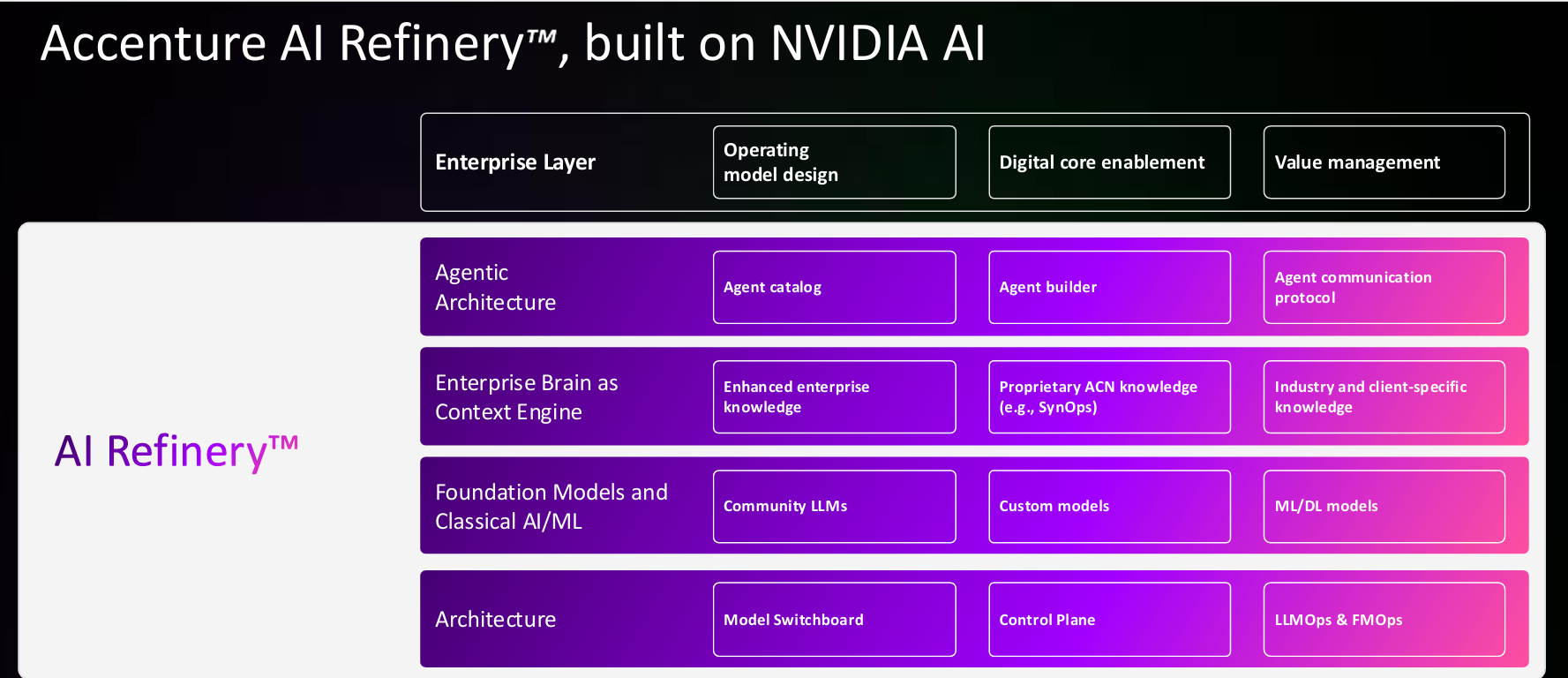
CEO Julie Sweet has been vocal about the company’s internal transformation. Accenture is investing $3 billion into its Data & AI practice. You don't spend that kind of money just to sell services to clients; you spend it to change how your own house runs. When leadership tells managing directors that their promotions are tied to AI adoption, they're acknowledging a simple truth. You can't sell a digital future to clients if you’re living in a manual past.
It’s a bold move. It’s also a necessary one. High-level consultants charge hundreds, sometimes thousands, of dollars an hour. Clients are starting to ask why they’re paying those rates if a significant portion of the work can be automated or enhanced by LLMs. If the leaders at the top don't understand the tech, they can't justify the value.
Why this isn't just about efficiency
Most people think AI is about doing things faster. That’s a narrow view. At the leadership level, it’s about better decision-making. Imagine a managing director who can use specialized tools to analyze decades of project data in seconds to predict where a new contract might go off the rails. That’s the "supercharged" leader Accenture wants.
They aren't looking for coders. They're looking for "AI-fluent" strategists. This means knowing:
- Which problems are actually solvable with current models.
- How to spot "hallucinations" before they reach a client's eyes.
- Where the ethical boundaries of data privacy lie.
- How to restructure a team when 40% of their traditional tasks are automated.
If you can't do that, you aren't leading. You're just a bottleneck.
The promotion bottleneck is real
Internal reports suggest that Accenture is integrating AI usage metrics directly into performance reviews. This isn't just about logging hours in a specific app. It’s about demonstrating how these tools improved project outcomes or reduced internal overhead. The message to senior staff is blunt. "We have a limited number of spots at the top. We're giving them to the people who can lead in a post-AI world."
This creates a high-pressure environment. Managing directors are already some of the hardest-working people in the professional services world. Now, they have to go back to school, in a sense. They have to unlearn old habits.
I’ve talked to consultants who feel the heat. They’re worried that the "human element" of consulting—the relationships, the intuition, the late-night negotiations—is being devalued. But Accenture’s stance seems to be that the human element is actually saved by AI. By automating the drudgery, leaders can focus on the high-level relationship work that machines can't touch. At least, that's the pitch.
The ripple effect across the Big Four
Accenture might be the loudest right now, but don't think Deloitte, PwC, or EY are sitting idle. We're seeing a massive arms race in professional services.
PwC has already committed $1 billion to expand its AI capabilities in the US. They're all trying to figure out the same thing. How do we keep our margins high when the "work" itself is becoming cheaper to produce? The answer is to move up the value chain. You stop being a producer of slide decks and start being an architect of AI-driven transformation.
If you’re a senior leader at any major firm right now and you think this is a "wait and see" situation, you're already behind. The "wait and see" period ended about eighteen months ago.
What AI leadership looks like in practice
It’s easy to talk about "adopting tech," but what does that actually mean for a managing director? Let’s look at a typical week.
Instead of spending four hours reviewing a 100-page regulatory filing, an AI-fluent leader uses a custom-tuned model to extract the three most critical risks for their specific client. They spend those four hours on the phone with the client’s CEO, discussing mitigation strategies.
Instead of asking a team of analysts to spend a weekend building a financial model, the leader uses a generative tool to create a baseline model in minutes. They then spend the weekend thinking about the "black swan" events that the model might have missed.
That is the shift. From doing to directing. From reviewing to refining.
The risk of the "fake it till you make it" approach
There’s a danger here. Some leaders will try to "AI-wash" their work. They’ll use the buzzwords in meetings and have their juniors do the actual AI work, then claim the credit. Accenture’s move to tie this to promotions suggests they’re looking for ways to audit this. They want to see the "digital fingerprints" of the leaders themselves.
Real fluency is hard to fake. If a leader can't explain the logic behind an AI-generated recommendation, they’re a liability. They’re essentially outsourcing their judgment to a black box. That’s not leadership; it’s abdication.
How to stay relevant in the new Accenture model
If you’re in a senior role—or aiming for one—and the "AI or stay put" mandate has you sweating, it’s time to change your approach. Stop looking at these tools as a "tech thing" and start looking at them as a "management thing."
- Get your hands dirty. You can't lead a team using tools you've never opened. Use the internal sandboxes. Run your own queries. Fail in private so you can lead in public.
- Focus on the "Human+." Accenture often talks about the "Human+Machine" partnership. Identify the tasks where you add the most value—empathy, complex negotiation, ethical judgment—and use AI to clear everything else off your plate.
- Be the bridge. The biggest gap in most companies isn't the tech itself; it’s the gap between the tech and the business problem. Be the person who translates "What this LLM can do" into "How this saves the client $50 million."
- Demand better data. AI is only as good as the data it’s fed. A leader who understands data quality is more valuable than one who just knows how to type a prompt.
Accenture’s move is a wake-up call for the entire corporate world. The ladder to the top just got a new set of rungs. They’re made of silicon and code. You can either start climbing or get comfortable where you are, because the people behind you aren't waiting.
Start by identifying one repetitive, data-heavy task you do every week. Don't delegate it to a human. Find the AI tool within your organization that can handle it. Master that one tool. Then find the next one. This isn't a race to finish a course; it's a permanent change in how you work.