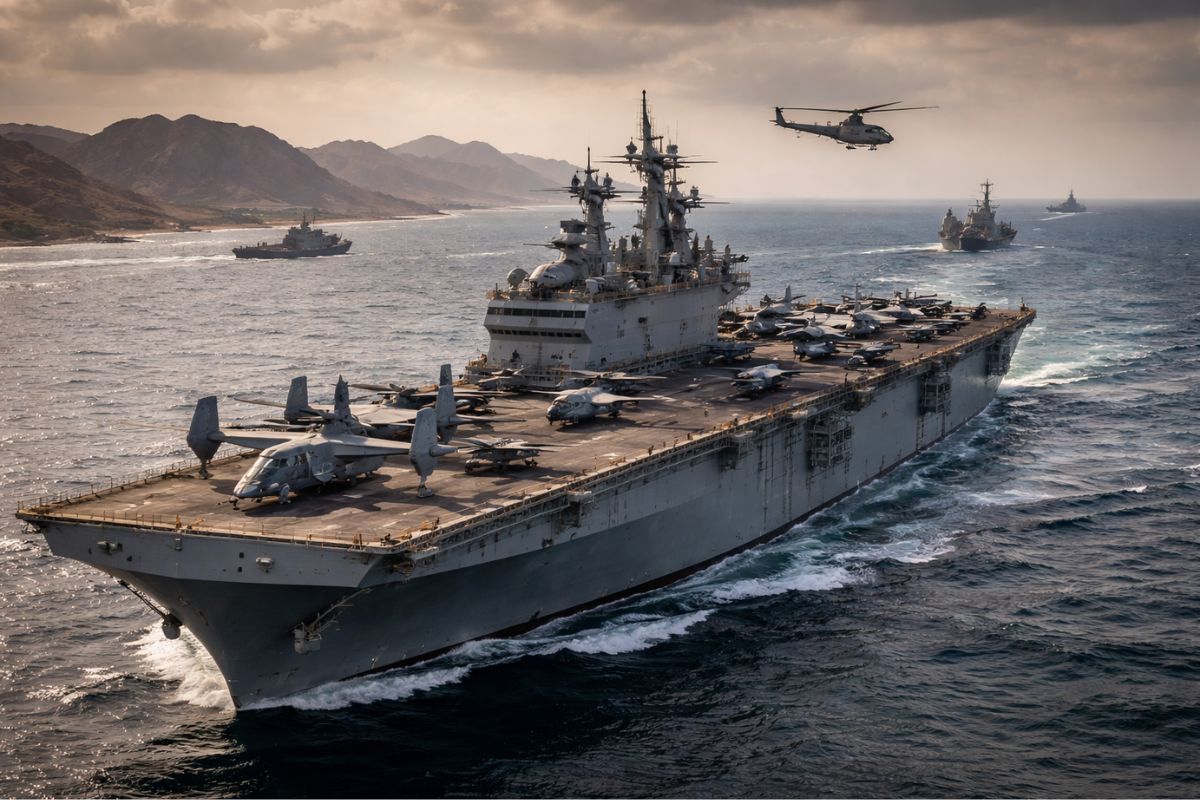
The headlines are screaming about "rising tensions" and "impending conflict" because the Pentagon is moving 3,500 soldiers into the Middle East. The mainstream media loves a deployment story. It’s easy. It’s visual. It suggests a massive shift in the tectonic plates of global geopolitics.
But if you’ve spent a decade analyzing logistics and theater-level force requirements, you know the truth. This isn’t an escalation. It’s a sedative.
By framing a deployment of 3,500 troops as a "surge," the media is showing its lack of tactical literacy. In a region where the U.S. already maintains dozens of bases and roughly 30,000 to 45,000 personnel depending on the week, adding a single brigade-sized element is the military equivalent of putting a Band-Aid on a gunshot wound. It’s enough to signal "we’re here," but it’s nowhere near enough to actually do anything.
The Math of Modern Deterrence
Let’s dismantle the "escalation" myth with cold, hard numbers.
To conduct a sustained offensive operation or even a credible defensive posture against a state-level actor in the Middle East, you don't need 3,500 soldiers. You need $150,000$ to $250,000$. You need a logistical tail that stretches from Rota, Spain, to the Persian Gulf. You need carrier strike groups—plural—not just one idling in the Mediterranean.
The deployment of 3,500 troops from the 82nd Airborne or similar rapid-response units is a PR move designed to satisfy two audiences:
- Domestic Voters: It shows the administration is "doing something" without actually committing to a war that would tank the stock market.
- Regional Allies: It acts as a security blanket for nervous partners who equate American boots on the ground with an ironclad guarantee of safety.
In reality, these troops are being sent to perform "force protection." That’s military speak for "guarding the people who are already there." They aren't there to kick down doors or change regimes. They are there to ensure that the existing infrastructure doesn't get overrun by low-level proxy skirmishes.
The Logistics of the "Lazy Consensus"
The competitor articles you're reading right now are focused on the threat. They want you to feel the vibration of the C-17 engines. What they miss is the opportunity cost.
When the U.S. moves a few thousand troops into the CENTCOM (Central Command) area of responsibility, it isn't strengthening its global position. It’s admitting a lack of imagination. We are stuck in a 20th-century feedback loop where every diplomatic friction is met with a troop transport.
- The Misconception: More troops equals more power.
- The Reality: Static troop presence creates more targets.
Every soldier added to a base in Iraq, Jordan, or Kuwait requires a massive amount of support. You need food, water, fuel, and medical supplies. You need to defend the supply lines that bring those items in. Before long, 70% of your "combat power" is dedicated solely to keeping the other 30% alive and fed.
I’ve watched defense contractors burn through billions of dollars maintaining these "temporary" surges. It’s a business model, not a military strategy. If the U.S. were serious about escalation, you wouldn't see 3,500 soldiers. You would see the quiet repositioning of long-range bombers to Diego Garcia and the surge of tankers to the Atlantic.
Why the Markets Aren't Panicking
If this were truly a "game-changing" escalation (to use the tired phrase I'm currently eviscerating), the Brent Crude futures would be vertical. They aren't.
The institutional money knows that 3,500 troops is a maintenance move. It's the cost of doing business in a volatile region. The "tension" the media sells you is a commodity; the reality is a stalemate.
We are seeing a shift toward "symbolic deployment." Since the end of the Cold War, the U.S. has used troop movements as a form of diplomatic signaling. But the signals are getting weaker. Our adversaries know that 3,500 troops cannot seize a city, they cannot secure a border, and they certainly cannot stop a ballistic missile swarm.
The Strategic Bankruptcy of "Force Protection"
Let’s talk about the term Force Protection.
When a commander asks for more troops because of "rising tensions," they are rarely asking for offensive capabilities. They are asking for more people to stand on the perimeter. This creates a "fortress mentality." We pull our personnel behind T-walls and Hesco barriers, effectively ceding the political and social ground to whoever is willing to walk the streets.
By sending 3,500 more troops, we aren't projecting power into the Middle East; we are digging the hole deeper.
- The Target Problem: More troops means more barracks, more dining facilities, and more motor pools. These are static targets for drone tech that costs less than a used Honda Civic.
- The Political Cost: Every deployment gives local opposition groups a recruitment tool. "The occupiers are increasing their numbers," they say. It doesn't matter if those troops are just there to fix trucks; the optics are the same.
- The Pivot Failure: Every time we "surge" into the Middle East, the "Pivot to Asia" dies a little more. We are playing a game of Whac-A-Mole while our primary competitors are building a new board.
The Counter-Intuitive Truth
If the U.S. actually wanted to de-escalate and project real strength, it would do the opposite. It would draw down the static, vulnerable troop presence and replace it with over-the-horizon capabilities.
True power in 2026 isn't a 19-year-old with an M4 standing at a gate in the desert. It’s the ability to strike with precision from a thousand miles away without warning. It’s cyber-persistence that can shut down a power grid without firing a shot. It’s economic leverage that makes war too expensive to contemplate.
Sending 3,500 troops is an admission that our diplomatic and high-tech tools have failed to provide the necessary stability. It is a fallback to the only thing the bureaucracy knows how to do: move heavy objects from Point A to Point B.
What You Should Actually Be Watching
Stop looking at troop numbers. They are a lagging indicator. If you want to know if the Middle East is actually about to explode, look at these three things instead:
- Insurance Premiums for Tankers: When Lloyd's of London starts spiking rates for the Strait of Hormuz, pay attention. That's real risk assessment, not political theater.
- Diplomatic Flight Paths: Watch where the mid-level State Department officials are going. The big-name visits are for the cameras. The quiet meetings in Muscat or Doha are where the actual deals—or declarations of war—happen.
- Electronic Warfare Activity: If GPS signals start failing in the Eastern Mediterranean, someone is preparing for a real fight.
The 3,500 troops are a distraction. They are the shiny object meant to keep you from noticing that the U.S. strategy in the region has no "end state." We are merely managing a decline, one brigade at a time.
This isn't a bold new chapter in American foreign policy. It's a footnote. It’s the sound of a superpower sighing as it realizes it can’t figure out how to leave the room.
Don't buy the hype of a "new war." We're just watching the same rerun, and the ratings are cratering.
Stop asking when the troops will arrive and start asking why we still think they’re the solution.