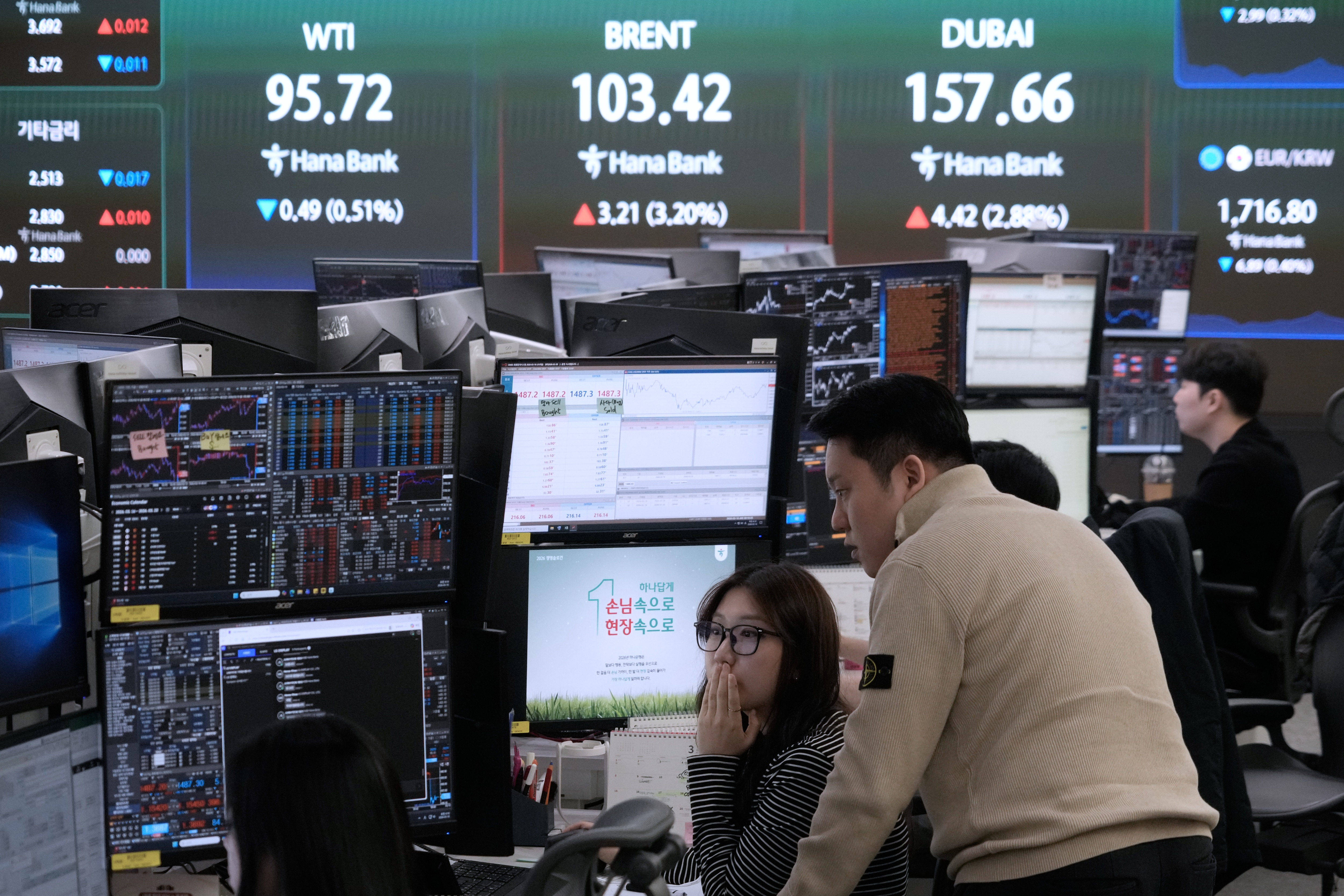
The global energy market is currently staring into a $200-a-barrel abyss. If the conflict involving Iran, Israel, and the United States stretches into June, the price of Brent crude will not just break records—it will functionally dismantle the current global economic order. For decades, the energy industry treated the "Hormuz risk" as a theoretical ghost, a tail-risk used to justify insurance premiums but never expected to materialize. On March 4, 2026, that ghost became a blockade.
Today, the Strait of Hormuz is essentially a graveyard for maritime commerce. Roughly 15 million barrels of crude and 5 million barrels of refined products are trapped behind a wall of ballistic missiles and drone swarms every single day. We are no longer debating whether prices will rise; we are witnessing a desperate scramble to find the "choke price" where global demand simply collapses because no one can afford to keep the lights on.
The Mathematics of a Protracted Siege
Financial analysts at Macquarie Group recently shifted the conversation from the $100 range to a much darker reality. Their latest report outlines a scenario where a war lasting through the second quarter of 2026 drives prices to **$200 per barrel**. While they currently assign a 60% probability to a resolution by the end of March, the remaining 40% chance of a "Summer of Fire" is what keeps central bankers awake.
This isn't just about a supply-demand imbalance. It is about a structural void in the market. The Strait handles roughly 20% of global oil consumption. There is no "Plan B" for a 20 million barrel-per-day hole. Even with the Biden-Trump transition politics pausing some strikes on Iranian infrastructure until early April, the physical reality is that the oil isn't moving.
To understand the scale, compare this to the 1970s oil embargo. Back then, only about 6% of global supply was removed. Today, the shortfall is nearly three times larger. The International Energy Agency (IEA) has already described this as the greatest energy and food security challenge in modern history.
Why $200 is the Endgame
If you want to know where the real carnage happens, look at Kharg Island. This terminal is the heart of Iran’s export machine. For the last three weeks, the market has been pricing in "uncertainty." If Western forces or Israeli strikes physically dismantle Kharg Island, the market shifts from pricing uncertainty to pricing a permanent loss of capacity.
A $200 price tag is the "demand destruction" phase. At that level, the global economy doesn't just slow down; it breaks.
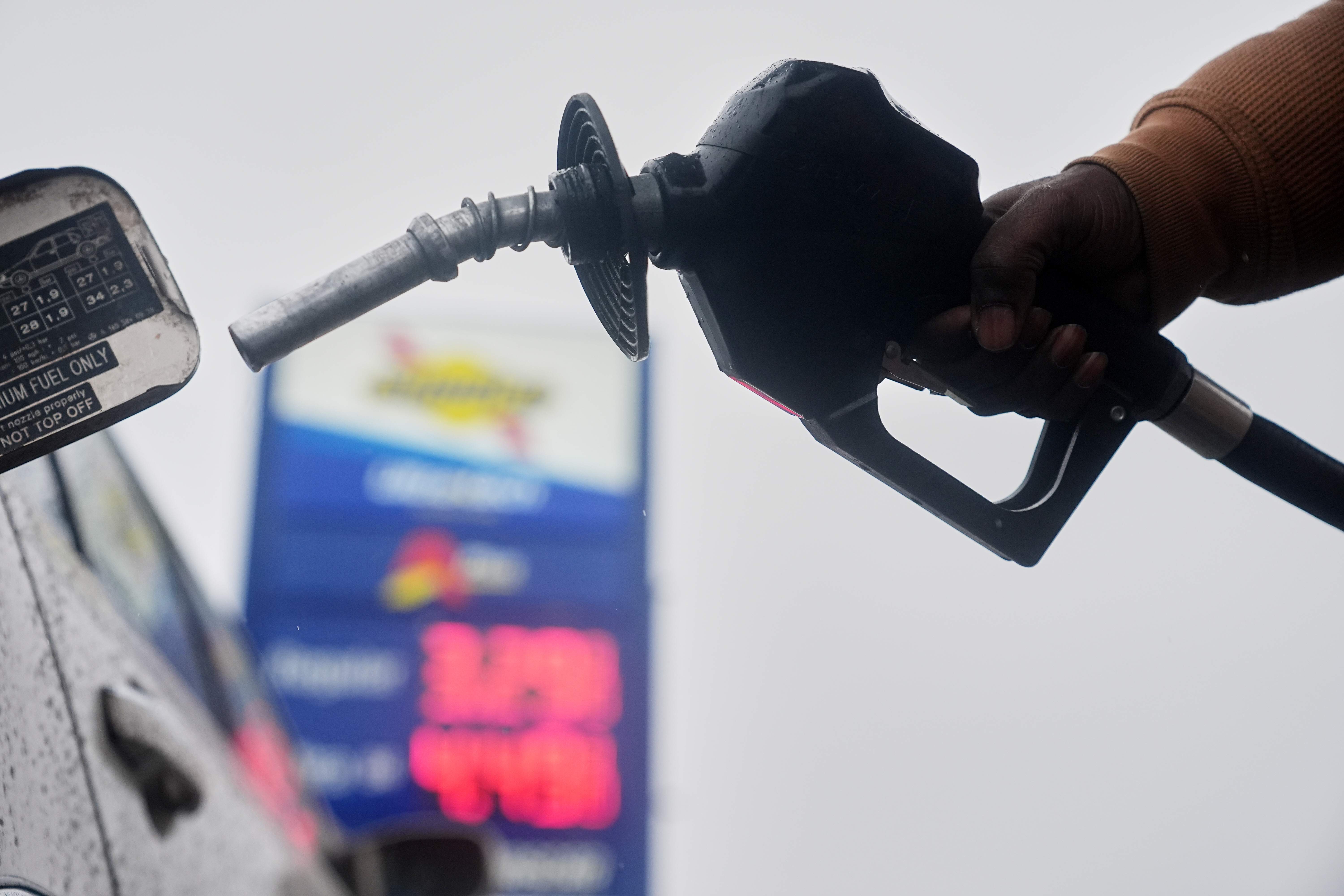
- Airlines: Jet fuel costs have already doubled. At $200 oil, the era of affordable long-haul flight ends abruptly.
- Agriculture: Fertilizer production is tied directly to natural gas and energy costs. A prolonged blockade in the Gulf means a global grocery emergency by autumn.
- Logistics: The "just-in-time" supply chain was built on the assumption of cheap diesel. That assumption is now dead.
The United States has attempted to buffer the blow by releasing hundreds of millions of barrels from the Strategic Petroleum Reserve (SPR), but the SPR is a bucket against a forest fire. You cannot replace the Persian Gulf with a strategic reserve.
The Fallacy of the Russian Safety Valve
On March 13, a quiet diplomatic maneuver saw the U.S. ease some sanctions on Russian oil in a desperate bid to keep global markets liquid. It was a deal with the devil that highlights the severity of the situation. However, even if every drop of Russian crude flows freely, it cannot bridge a 20-million-barrel gap.
Furthermore, the crisis isn't limited to crude. The suspension of Qatari liquefied natural gas (LNG) has sent European gas benchmarks through the roof, nearly doubling prices to over €60/MWh. European storage was already thin after a brutal 2025-2026 winter. If the war drags into June, the industrial deindustrialization of Germany and the UK moves from a fear to a mathematical certainty.
The Pivot Point on April 6
Everything hinges on a ten-day window. President Trump recently extended a deadline for potential strikes on Iranian energy sites to April 6. Iran, in a calculated move of "oil diplomacy," allowed ten tankers to pass through the strait as a goodwill gesture. This was not a reopening; it was a demonstration of control.
The market is currently bifurcated. On one side, you have traders betting on a quick diplomatic off-ramp, holding put options in the $60 range. On the other, there is a massive surge in "call" options—bets that Brent will hit **$150 by late April** and $200 by June. The divergence in these bets shows a world that doesn't know if it's heading for a soft landing or a total system crash.
The hard truth is that even if the shooting stops tomorrow, the insurance markets and the physical damage to infrastructure mean the "risk premium" is now a permanent feature of the landscape. The era of $70 oil was a luxury of a geopolitical peace that no longer exists. If the Strait doesn't open fully by the time the Northern Hemisphere enters its summer driving season, $200 will be the floor, not the ceiling.
Would you like me to analyze the specific impact of these projected oil prices on the 2026 global inflation indices?