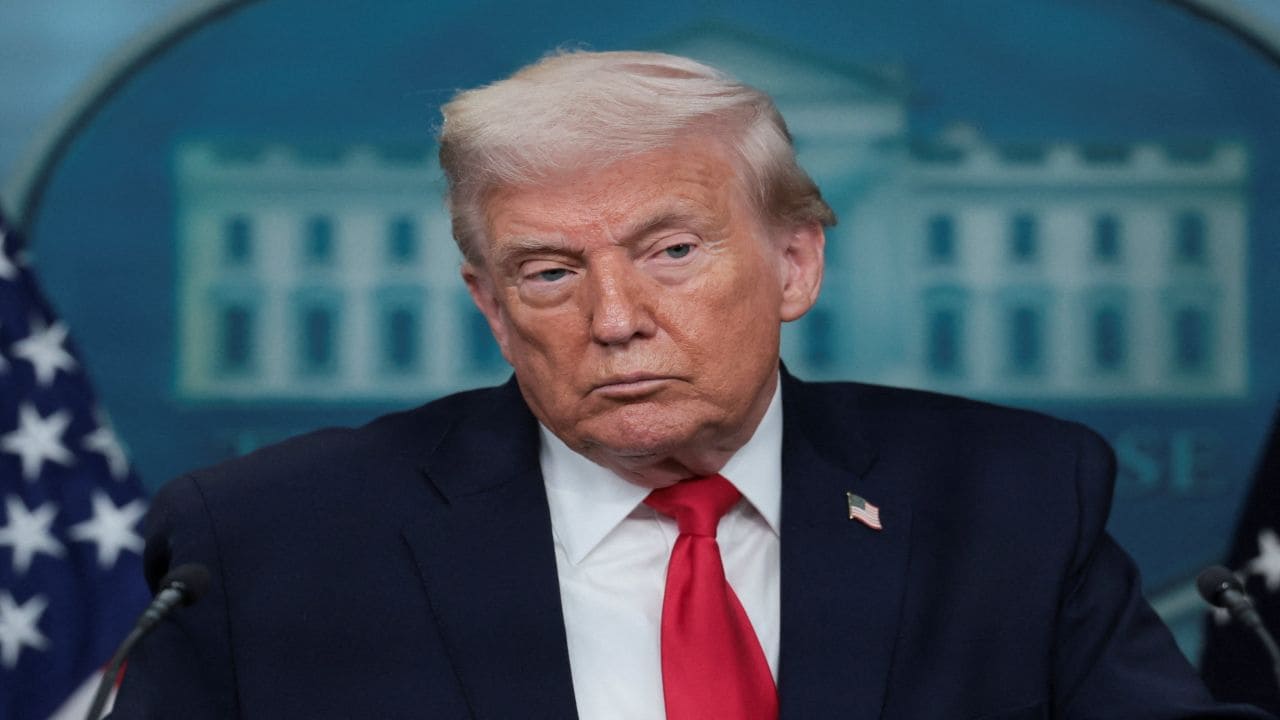
The American Treasury is currently sitting on a mountain of cash it has no legal right to keep. On February 20, 2026, the Supreme Court delivered a crushing blow to the executive branch, ruling 6-3 that President Trump’s sweeping "Liberation Day" tariffs were an unconstitutional overreach. By invoking the International Emergency Economic Powers Act (IEEPA) to tax nearly every product entering the United States, the administration bypassed Congress to collect roughly $175 billion in duties that the highest court in the land has now declared illegitimate.
But winning a case at the Supreme Court is one thing; getting the money back is another. Despite the ruling in Learning Resources, Inc. v. Trump, the administration has shown zero interest in a swift refund process. While Senate Democrats have fired off letters demanding immediate, automatic disbursements, the White House has signaled a strategy of total obstruction. Trump’s own economic advisers have characterized the $175 billion as "in dispute," predicting a legal war of attrition that could last five years or more.
The Constitutional Wall and the IEEPA Overreach
The core of the legal disaster lies in the administration’s attempt to use a 1977 national emergency statute as a blank check for trade policy. For nearly fifty years, the International Emergency Economic Powers Act was a tool for freezing the assets of terrorists or sanctioning rogue regimes. It was never intended to be a revenue generator. When Chief Justice John Roberts wrote the majority opinion, he was pointed about the separation of powers.
"The power to regulate importation does not include the power to tax," Roberts wrote. Under Article I, Section 8 of the Constitution, that authority belongs to Congress alone. By framing a trade deficit or the flow of fentanyl as a "national emergency" to justify a 10 percent global tariff, the administration didn't just bend the law; it broke the constitutional mechanism designed to prevent executive autocracy.
The court’s decision was underpinned by the Major Questions Doctrine. This principle suggests that if the President wants to take an action with "vast economic and political significance," he needs a clear, specific mandate from Congress. The court found that IEEPA’s text—which allows the President to "investigate, regulate, or prohibit" transactions—was far too thin a thread to hang a multibillion-dollar tax regime upon.
A Calculated Stall in the Treasury
If you are a small business owner who paid an extra 10 percent on every shipment of electronics or textiles for the last year, you might expect a check in the mail. You shouldn't hold your breath.
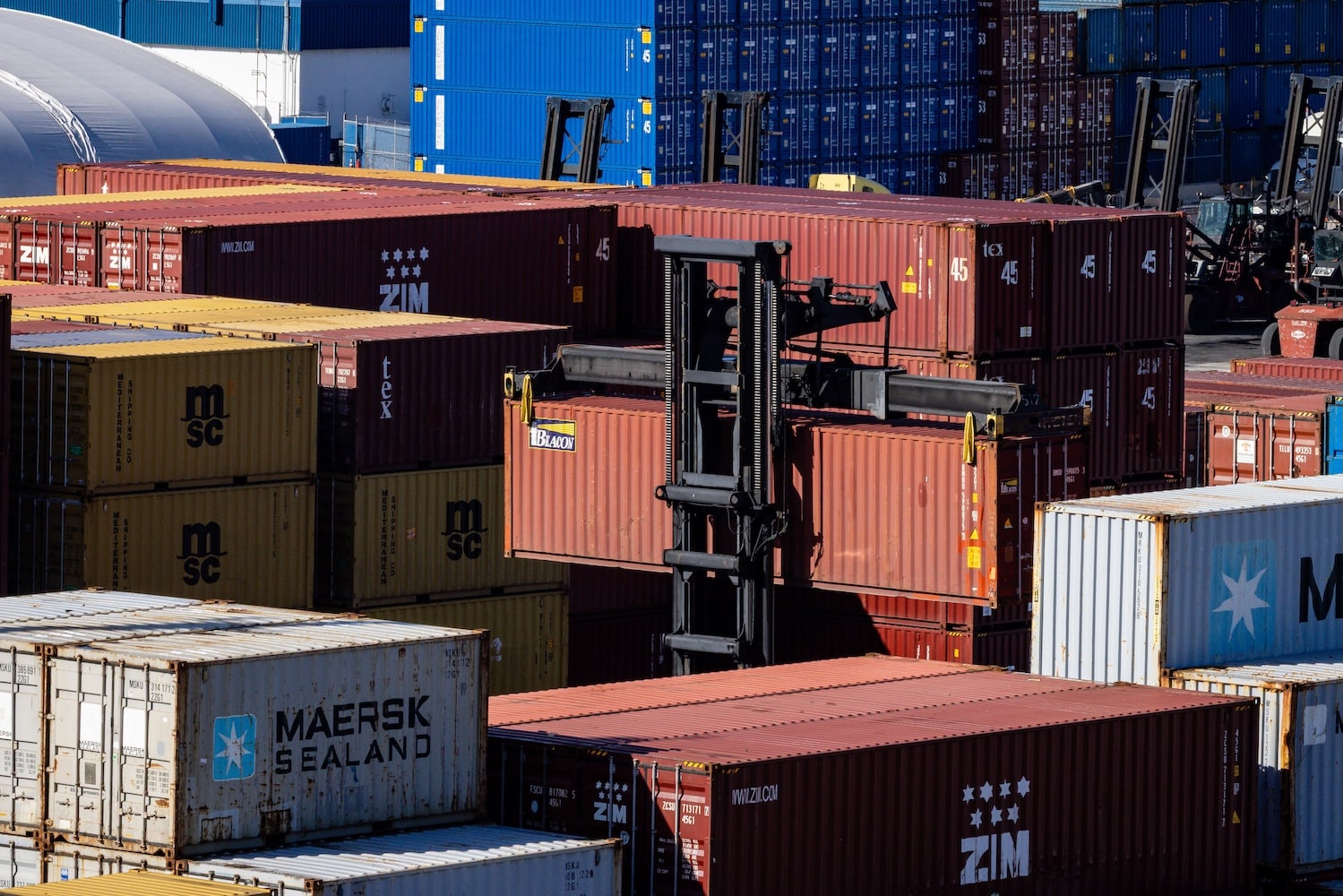
The U.S. Customs and Border Protection (CBP) stopped collecting the illegal duties on February 24, but they haven't started giving them back. The administration’s strategy is simple: Bureaucratic Entrenchment. By forcing every individual importer to file a formal protest or a lawsuit in the Court of International Trade, the government can effectively keep the $175 billion on its books for years.
- The Protest Loophole: Importers typically have 180 days to protest a tariff assessment. However, the government can take up to two years to rule on those protests.
- The "In Dispute" Defense: Treasury Secretary Scott Bessent has hinted that since the Supreme Court didn't explicitly order a specific refund mechanism, the money is not "liquidated" and remains subject to further litigation.
- The New Surcharge: To add insult to injury, the administration has already moved to replace the struck-down tariffs with a new 10 percent "temporary import surcharge" under Section 122 of the Trade Act of 1974.
This isn't just a legal disagreement; it is a cash-flow strategy. The federal government has already spent much of this money. Refunding $175 billion in a single fiscal year would create a massive hole in a budget already strained by tax cuts and defense spending.
Who Actually Gets the Check?
There is a dirty secret in the world of trade litigation: the people who paid for the tariffs are almost never the ones who get the refund.
When a company like Walmart or a local hardware store pays a tariff, they rarely just eat the cost. They pass it on to the consumer. If the government eventually refunds the "importer of record," that money goes back into the corporate coffers of the retailer or the wholesaler. The American consumer, who paid $1.10 for a $1.00 item for months, gets nothing.
This creates a perverse incentive for the government to delay. The longer the money stays in the Treasury, the more "distanced" the refund becomes from the original economic harm. Senate Democrats, led by Chuck Schumer and Ron Wyden, are calling for an automatic refund process that prioritizes small businesses. But without a specific court order or a new act of Congress, the CBP has no internal mandate to hand over the cash.
The Fragmented Legal Landscape
The legal fallout is currently split into three distinct fronts:
| Action Category | Legal Standing | Refund Likelihood |
|---|---|---|
| IEEPA Global Tariffs | Ruled Unlawful | High (but delayed) |
| Section 301 (China) | Currently in Litigation | Moderate |
| Section 122 (New Surcharge) | Active | TBD |
For businesses, the uncertainty is worse than the tax itself. Many companies have already restructured their entire supply chains to avoid the "Liberation Day" duties. Now, those same companies are being told the taxes were illegal, but the money is gone, and a new, different tax is taking its place.
The Section 122 Gambit
Within hours of the Supreme Court ruling, the White House announced a pivot to Section 122 of the Trade Act of 1974. This allows for a "temporary" 150-day import surcharge to deal with balance-of-payments emergencies.
This is a tactical retreat. While the IEEPA was a permanent power grab, Section 122 is a temporary one. However, by cycling through different legal authorities, the administration is keeping the trade war alive while effectively "resetting the clock" on legal challenges. It is a game of regulatory whack-a-mole where the mallet is the Constitution and the mole is $175 billion in taxpayer money.
The Supreme Court didn't just rebuke a policy; it exposed a fundamental flaw in how the U.S. government views trade revenue. Tariffs have gone from being a tool of foreign policy to a slush fund for executive priorities.
The Long Road to Liquidation
Even if the Court of International Trade orders the Treasury to begin disbursements tomorrow, the logistics are a nightmare. Thousands of "entries"—the paperwork associated with every single shipment—must be re-calculated. In many cases, the "importer of record" may no longer even be in business, having been crushed by the very tariffs now ruled illegal.
The government is betting that the cost and complexity of recovery will discourage all but the largest corporations from seeing their lawsuits through to the end. It is a war of attrition where the house always wins. For the small business owner in New Mexico or the manufacturer in Ohio, the Supreme Court’s "victory" is a paper one. The cash remains locked behind a vault of red tape and executive defiance.
Would you like me to analyze the specific impact of the new Section 122 tariffs on your industry’s supply chain?