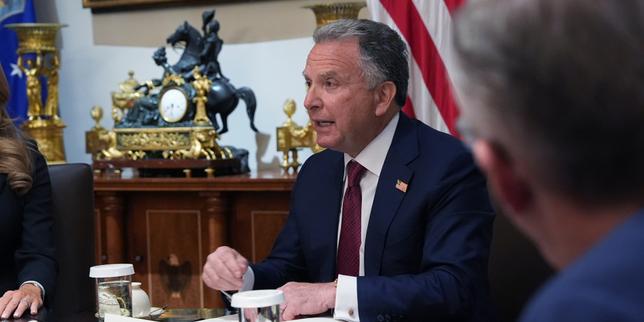
The diplomatic silence just broke in a big way. For months, rumors swirled about a back-channel negotiation between Washington and Tehran, but we finally have a name and a concrete framework attached to the chatter. Steve Witkoff, the U.S. special envoy to the Middle East, confirmed that the United States has officially put a 15-point proposal on the table. It's a massive gamble. This isn't just another round of "let's talk about talking." It’s a specific, rigid, and reportedly "take it or leave it" roadmap designed to fundamentally shift the power dynamics of the Middle East.
If you've been following the regional escalation, you know the stakes couldn't be higher. We're looking at a landscape where proxy wars in Lebanon, Gaza, and Yemen are bleeding into a direct confrontation between major powers. Witkoff’s confirmation marks the first time the administration has admitted to handing over such a detailed list. They’re moving past vague warnings. They're trying to build a fence around Iran’s regional influence using a mix of heavy-handed sanctions relief as the carrot and the threat of total isolation as the stick. Recently making news recently: Finland Is Not Keeping Calm And The West Is Misreading The Silence.
Why the 15 Points Matter Right Now
Diplomacy usually happens in the shadows, especially with a country like Iran. By going public with the existence of this list, the U.S. is signaling two things. First, they want the Iranian public and the international community to know there is a "way out." Second, they're putting the ball squarely in Tehran's court. If the region slides further into a full-scale war, the U.S. can point to this document and say they tried everything.
The timing is everything. Iran is currently dealing with an internal economic crisis and a succession question within its top leadership. They aren't exactly operating from a position of absolute strength. Witkoff’s strategy seems to be hitting them while they're weighing the cost of their regional "Axis of Resistance." More insights regarding the matter are explored by The Guardian.
What Is Actually on That List
While the full text of every single point hasn't been leaked to the press in a PDF format, the core pillars are becoming clear through diplomatic briefings and Witkoff's own statements. It's not just about nukes. That was the mistake of previous agreements. This list is much broader.
Regional Proxies and the End of Militia Support
The U.S. is demanding a complete halt to the funding and arming of groups like Hezbollah, Hamas, and the Houthis. This is a non-negotiable for Witkoff. For the U.S., a deal that only covers uranium enrichment while Iranian-made missiles are falling on commercial shipping in the Red Sea is a bad deal. They're looking for a regional "grand bargain" that forces Iran to act like a standard nation-state rather than a revolutionary hub.
The Nuclear Threshold and Advanced Centrifuges
We aren't just talking about the old JCPOA terms. The 15 points include stricter oversight on advanced centrifuge production. The goal is to push Iran’s "breakout time"—the time it would take to produce enough material for a weapon—back to at least a year.
Missile Programs and Range Limits
This is often the sticking point that kills deals. The U.S. wants hard limits on Iran’s ballistic missile development, specifically focusing on ranges that could reach Europe or the U.S. mainland. Iran has historically called this a "sovereignty issue," but Witkoff is making it clear that sanctions won't disappear unless the missile program is restricted.
The Role of Steve Witkoff
Witkoff isn't your typical career diplomat. He’s a businessman by trade, a real estate mogul who approaches these meetings like a high-stakes closing. His presence as the face of this 15-point plan tells us the U.S. is treating this like a transaction. It’s "What do you want, and what are you willing to give up to get it?"
His confirmation of the 15 points wasn't a slip of the tongue. It was a calculated move to show that the U.S. is organized and has a unified list of demands. He’s been shuttling between regional capitals—Riyadh, Doha, and Jerusalem—to ensure that the allies are on board with these 15 points. If the allies don't support the list, the list has no teeth.
Misconceptions About the Peace Process
People often think these deals are about friendship. They aren't. They’re about managed hostility. No one in the U.S. government expects Iran to become a democratic ally overnight. The 15 points are about containment.
Another big mistake is thinking that sanctions are the only lever. The U.S. is also using the "Abraham Accords" framework as a pressure point. They're showing Tehran that the rest of the Arab world is moving on and integrating economically, leaving Iran behind. The 15-point plan is essentially an invitation to join the modern regional economy—but only if they drop the revolutionary baggage.
Is Tehran Even Listening
The reaction from Tehran has been a mix of defiance and curiosity. They've acknowledged receiving the "framework," but they're publicly sticking to their "maximum resistance" rhetoric. Behind the scenes, it's a different story. The Iranian rial is struggling. The youth are restless. The hardliners are still in charge, but even they have to balance the books.
If Iran accepts even half of these points, it would be a massive win for regional stability. But the "all or nothing" nature of a 15-point list makes it a tough pill to swallow. Usually, these things get whittled down to three or four points. Witkoff is betting that the 15-point approach provides enough "trade bait" to eventually land on a solid ten.
The Regional Impact of a Potential Accord
If an agreement is reached based on these points, the ripple effects would be instant. We’d see a cooling of the borders in Northern Israel and Southern Lebanon. We’d see a drop in insurance rates for shipping in the Gulf. Most importantly, it would decouple the various conflicts in the Middle East. Right now, everything is connected—Gaza affects Lebanon, which affects Yemen, which affects Iraq. This plan tries to break those links by going straight to the source of the funding and command.
It’s a high-wire act. If the 15-point plan fails, the U.S. has basically signaled that diplomacy is over. When you put your "final" list on the table and it gets rejected, the only thing left is escalation.
Watch the oil markets and the diplomatic cables out of Geneva and Muscat over the next few weeks. The U.S. has made its move. Now we wait to see if Iran is ready to trade its revolutionary goals for a seat at the global table. The next step for anyone watching this space is to monitor the IAEA reports on Iranian enrichment levels. Those numbers will tell you if Tehran is negotiating in good faith or just buying time to finish what they started. If enrichment stays high while they "review" the 15 points, you know the list is already dead in the water. Keep an eye on the rhetoric from the Iranian Foreign Ministry; any mention of "mutual respect" or "lifting all sanctions first" is a sign they’re preparing a counter-offer that likely ignores most of Witkoff’s demands.