The headlines are screaming about a $100 barrel because it’s easy. It’s lazy. It’s the kind of math a toddler does when they see a fire and assume the whole world is about to burn. The "Trump Premium"—the idea that geopolitical saber-rattling against Iran is the primary driver of your pain at the pump—is a convenient fiction sold by analysts who haven't looked at a balance sheet since the 1970s.
If you think a few tweets and a threat to Iranian crude export facilities can hold oil at triple digits, you don’t understand the mechanics of the modern energy market. You’re playing checkers while the Permian Basin is playing 4D chess.
The mainstream narrative suggests we are one missile strike away from a global energy collapse. That’s nonsense. Here is the reality: the world is currently drowning in supply, and the only thing keeping prices even remotely elevated is a fragile, psychological fear that has no basis in physical reality.
The Myth of the Iranian Supply Shock
Let’s dismantle the "Iran Factor" immediately. Every time a U.S. administration mentions Iranian crude, the speculators in London and New York go into a feeding frenzy. They bid up futures contracts based on the "disruption" of 1.5 to 2 million barrels per day (bpd).
Here is what they won't tell you: Iran’s oil isn’t "missing" from the market even when it’s sanctioned. It flows through the "dark fleet"—a massive, unregistered armada of tankers that switch off transponders and rebrand crude as Malaysian or Omani. This oil is already priced in. If the U.S. strikes these facilities, they aren't removing a vital organ of the global economy; they are pruning a limb that has already been bypassed by more efficient, albeit shadier, circulatory systems.
More importantly, the spare capacity held by Saudi Arabia and the UAE alone dwarfs any potential loss from Iran. We are looking at nearly 4 million bpd of "turn-of-the-tap" crude sitting in the wings. The fear of a supply vacuum is a ghost story told by hedge funds to justify their long positions.
The American Juggernaut Nobody Wants to Acknowledge
While the media focuses on the Middle East, the real story is happening in West Texas. U.S. crude production is at record highs, consistently hovering around 13 million bpd.
I’ve spent twenty years watching "peak oil" theorists move the goalposts. They told us the shale revolution was a flash in the pan. They told us high interest rates would kill the independent drillers. They were wrong. Every. Single. Time.
American producers have become hyper-efficient. We aren't just drilling more; we are drilling smarter. The lateral length of a standard Permian well has increased by 50% in the last few years. We are extracting more oil with fewer rigs and less capital.
$100 oil is actually the worst thing that could happen to the industry. Why? Because at $100, the "zombie" drillers—the inefficient, debt-bloated companies that should have gone bankrupt years ago—suddenly become viable again. High prices prevent the necessary Darwinian clearing of the market. When prices spike due to political theater, it triggers an over-investment cycle that inevitably leads to a massive, gut-wrenching crash.
The False Correlation Between Conflict and Crude
Historical data is the enemy of the $100 oil narrative. Look at the 2022 invasion of Ukraine. Prices spiked to $130, and what happened? The world didn't stop. Demand didn't just "adjust"; it evaporated in key sectors, while supply chains rerouted with startling speed.
Oil is a fungible commodity. It finds a way.
The current administration's threats against Iran are a domestic political tool, not a fundamental economic shift. It’s "tough guy" theater designed to project strength. But the physical market—the guys actually moving wet barrels—knows that a strike on Iranian facilities would likely be met with a massive release from the Strategic Petroleum Reserve (SPR) and a nod to Riyadh to open the floodgates.
Why You’re Asking the Wrong Question
The question isn't "Will oil hit $100?"
The question is "How long can the market ignore the massive glut coming in late 2025?"
We are facing a convergence of factors that point toward a price collapse, not a surge:
- China’s Structural Slowdown: The engine of global oil demand is sputtering. China’s transition to EVs isn't a "green dream"; it’s a national security imperative to reduce their dependence on the U.S. dollar-denominated oil trade.
- The OPEC+ Dilemma: The cartel is losing market share to the U.S., Brazil, and Guyana. Eventually, the Saudis will grow tired of cutting production to keep prices high for American shale drillers. When they decide to "regain market share," they will crash the price to $40 to starve out the competition. They've done it before. They’ll do it again.
- Efficiency Gains: Your car, your house, and your local factory are all more energy-efficient than they were five years ago. Demand is decoupled from GDP growth for the first time in history.
The "War Premium" is a Tax on the Uninformed
If you are buying oil stocks or betting on futures because you think a war with Iran is "good for energy," you are the liquidity for the professionals who are already selling.
I’ve seen traders lose everything chasing the "geopolitical spike." They buy the rumor, but by the time the first missile hits, the "smart money" has already exited. They know that the initial shock lasts 48 hours. After that, the cold, hard reality of supply and demand takes over.
The Brutal Truth About Energy Independence
The irony of the current situation is that the more the U.S. threatens foreign producers, the more it incentivizes domestic production that will eventually tank the price. We are our own worst enemy. We are drilling our way into a low-margin future.
The Trump administration might talk a big game about protecting the oil industry by hitting Iran, but their actual policy of "drill, baby, drill" is a direct attack on the price of the commodity. You cannot have "total energy dominance" and "high oil prices" at the same time. It is a physical impossibility. Dominance implies an oversupply that crashes the market.
Imagine a scenario where the U.S. actually carries out strikes on Iranian refineries. For three days, the price hits $105. By week three, the global market realizes that the 1.5 million missing Iranian barrels have been replaced by a combination of SPR releases, increased Saudi output, and a surge in U.S. exports. The price drifts back to $75. The only people who win are the politicians who got their soundbite and the traders who shorted the top.
Stop Watching the News, Start Watching the Tankers
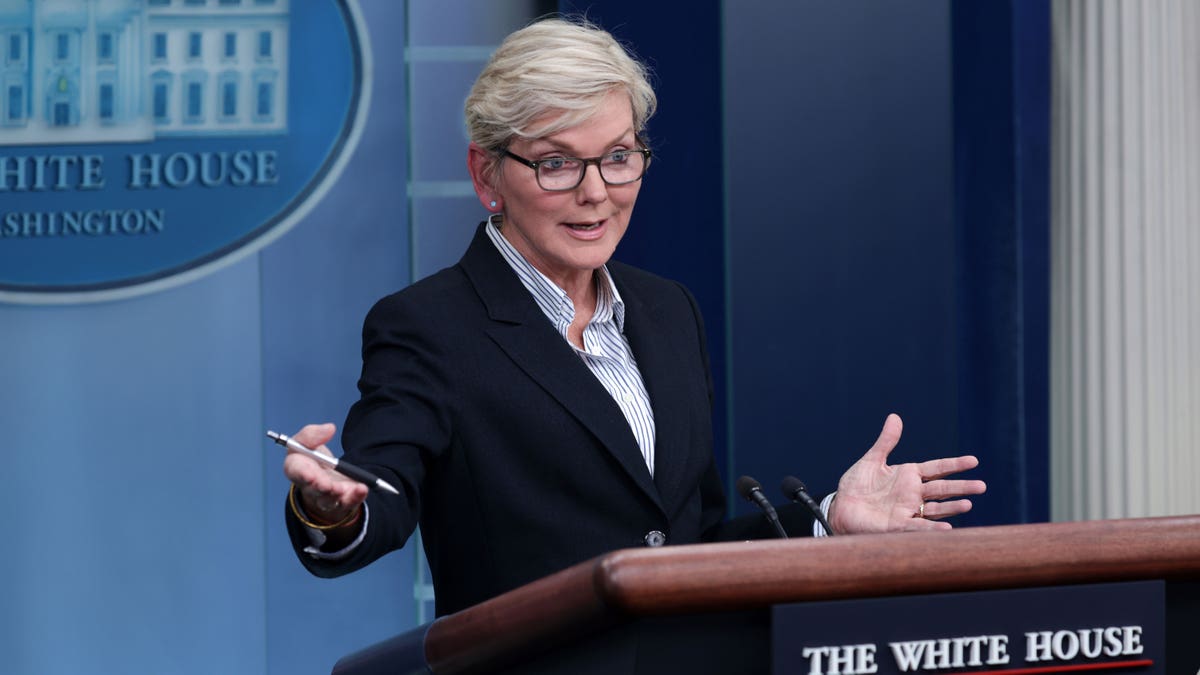
If you want to know where oil is going, stop listening to White House press briefings. Watch the satellite data of tanker movements. Watch the inventory builds in Cushing, Oklahoma.
The data says we are oversupplied. The data says demand is peaking. The data says that $100 oil is a temporary hallucination fueled by political anxiety and a lack of historical perspective.
The real threat isn't a supply shortage from the Middle East. It’s the sheer, unstoppable competence of the American oil patch. We are too good at finding the stuff, and we are too efficient at getting it out of the ground. In a world of abundance, the only way to keep prices high is to manufacture fear.
Don't buy the fear. It’s the most expensive commodity on the market.
Short the hype. Bet on the glut.