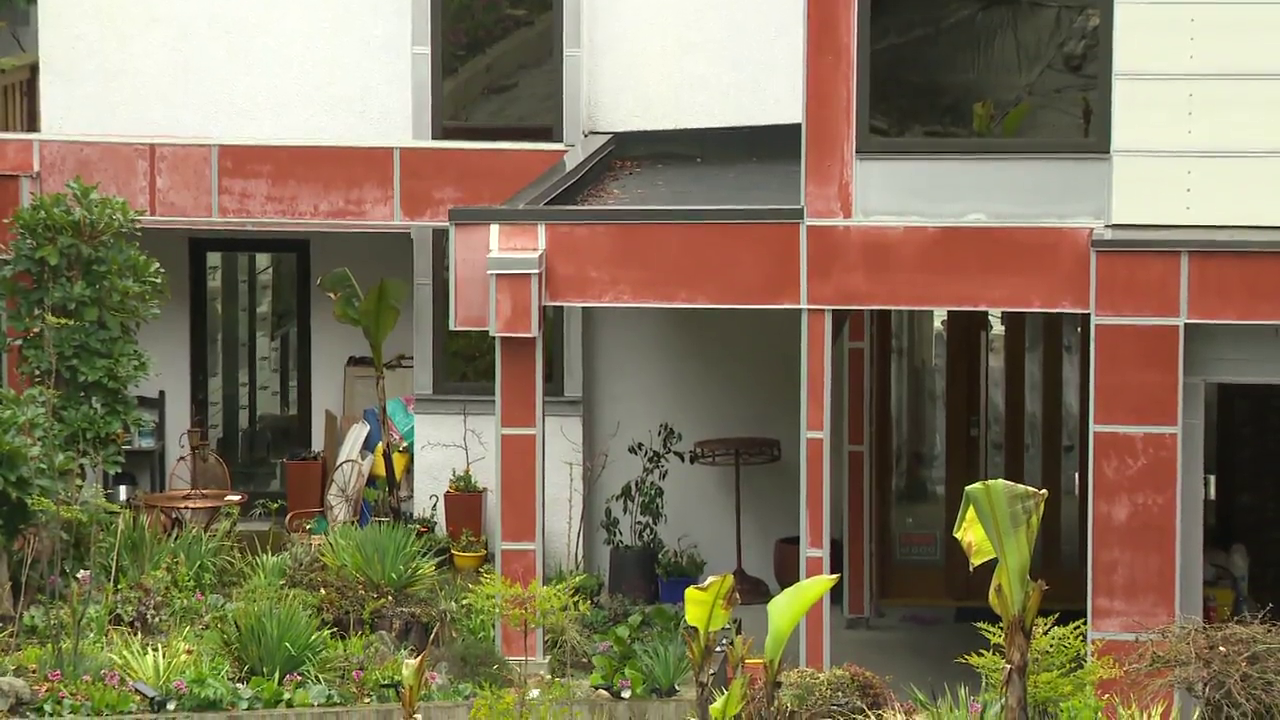
The air in West Vancouver usually smells of salt spray and expensive cedar mulch. It is a place where silence is a luxury bought and sold in seven-figure increments. But on a narrow, winding stretch of Altamont Court, the silence feels different. It isn't the quiet of a peaceful afternoon; it is the heavy, suffocating stillness of a crime scene where the victim is a house.
For years, the mansion at 2540 Altamont Court has stood as a monument to human ego and the slow, grinding gears of municipal law. It was supposed to be a dream. It ended up a skeleton. To the neighbors, it is a "monster house." To the District of West Vancouver, it is a defiance of the law. To the owner, it is a $10 million hill to die on.
But behind the legal filings and the stop-work orders lies a deeper story about what happens when our desire for "more" hits the hard wall of "no."
The House That Shouldn't Be
In 2017, the permits were signed. The vision was clear: a sprawling, ultra-modern estate nestled into the steep topography of one of Canada’s wealthiest neighborhoods. If you have ever walked these streets, you know the aesthetic. Glass. Steel. Infinity pools that seem to spill directly into the Burrard Inlet.
The trouble began when the vision on the blueprints stopped matching the reality on the ground.
By 2021, the District of West Vancouver had seen enough. Their inspectors found that the house didn't just push the boundaries of its permits—it steamrolled over them. The building was too high. The floor area was too vast. The very earth had been moved in ways that weren't authorized. In a rare and scorched-earth move, the District Council voted unanimously to order the entire structure demolished.
They didn't want a fine. They didn't want a retrofit. They wanted it gone.
Imagine, for a second, being the person who owns that property. You have poured millions into the foundation, the framing, the promise of a legacy. Then, a group of officials tells you that the only way forward is to spend hundreds of thousands more to turn your dream into a pile of rubble.
The Weight of a Red Tag
When a "Stop Work" order is slapped onto a construction site, it’s usually a temporary hitch. A paperwork error. A missed inspection. But at Altamont Court, the red tag became a permanent fixture, weathered by the rain until it bled pink.
Construction stopped, but the decay began.
Plywood warped. Rebar rusted, weeping orange streaks down grey concrete. The house became a "ghost house," a skeletal ribcage of a building that stared out at the neighbors with empty window sockets. For the people living next door, this wasn't just a legal dispute; it was a blight. They bought into West Vancouver for the manicured perfection, not to live next to a rotting monument to litigation.
The invisible stakes here aren't just about property lines or height restrictions. They are about the social contract. In a community like this, there is an unwritten agreement: we all play by the rules so that our collective environment remains pristine. When one person decides the rules are mere suggestions, the friction creates a heat that can burn a whole neighborhood down.
A Legal Labyrinth with No Exit
The battle moved from the dirt of the construction site to the sterile, fluorescent-lit halls of the British Columbia Supreme Court.
The owner, a numbered company, fought back. They argued that the demolition order was "unreasonable" and "vague." They claimed they weren't given a fair chance to fix the issues. In the world of high-stakes real estate, litigation is often used as a blunt instrument to tire out the opposition. If you can keep the lawyers talking long enough, perhaps the political will to tear down a $10 million structure will eventually erode.
Consider the irony. The very thing that makes West Vancouver desirable—its strict adherence to beauty and order—is the very thing the owner is fighting against.
The District’s position remained unshakable. They argued that if they let this one slide, the precedent would be catastrophic. If you can build a house 20% larger than allowed and simply pay a fine, then the rich effectively live in a world without zoning laws. Fines just become the "cost of doing business." Demolition is the only consequence with real teeth.
The Human Cost of Concrete
Let’s look at a hypothetical neighbor. We’ll call her Margaret. Margaret worked forty years as a surgeon, saved her pennies, and bought a modest bungalow on Altamont decades ago. She watched the neighborhood transform. She didn't mind the new money, but she minds the arrogance.
For Margaret, the ghost house is a daily reminder of a lack of accountability. She sees the rats that have taken up residence in the stagnant pools of rainwater in the basement. She hears the wind whistling through the exposed studs at 3:00 AM. To her, this isn't a "legal battle over a mansion." It’s a loss of peace.
Her property value is tied to a house that shouldn't exist but refuses to die.
The owner, conversely, likely feels like a victim of a bureaucracy that is "out to get them." In their eyes, they are trying to improve a plot of land and create something magnificent, only to be tripped up by inspectors who care more about a few inches of roof height than the millions of dollars at stake.
It is a collision of two different types of entitlement: the right to build what you want on your own land, and the right of a community to dictate its own character.
The Sound of Silence
As of 2026, the house still stands. Or rather, it still looms.
The legal proceedings have become a recursive loop. Every time a demolition date nears, a new injunction appears. A new lawyer enters the fray with a new interpretation of a decades-old bylaw. The house has become a landmark of what happens when wealth meets a stubborn, immovable object.
But nature doesn't wait for court rulings.
Blackberries are beginning to climb the concrete walls. Moss is thick on the stairs that were meant for Italian marble. In some ways, the house is being reclaimed by the West Coast forest before it ever had a chance to be a home.
The true cost of 2540 Altamont Court isn't the $10 million in lost equity. It isn't the legal fees that could have funded a dozen social programs. It is the lingering bitterness that hangs over the street. It is the way neighbors look at each other with suspicion, wondering who will be the next to break the code.
There is a specific kind of sadness in a house that was never lived in. A home is supposed to be a vessel for memories—burnt toast, children’s height marks on doorframes, the quiet hum of a refrigerator in the middle of the night. This house has none of that. It has only the cold memory of arguments and the sterile language of affidavits.
The Finality of the Sledgehammer
Eventually, the lawyers will run out of breath. The judges will run out of patience. One day, the silence on Altamont Court will be shattered not by the sound of a family moving in, but by the rhythmic, violent thud of a wrecking ball.
It will be a spectacle. People will gather on the sidewalk, shielded by yellow caution tape, to watch $10 million of ambition turn into dust. There will be no winners that day. The owner loses their investment. The District loses years of resources. The neighbors lose the quiet they so dearly prize.
But as the dust settles, perhaps the social contract will be reinforced. The message will be sent, vibrating through the expensive soil of West Vancouver: the mountain does not belong to you just because you bought a piece of it.
For now, the mansion remains. It sits in the grey twilight, a skeleton of a dream, waiting for the inevitable. It is a monument to the fact that in the battle between a man's castle and the community’s wall, the wall usually wins—it just takes a very long time for the stones to fall.
The house is a warning written in rebar.
As you drive past, the shadows of the unbuilt rooms stretch across the pavement, long and jagged. They reach toward the neighboring fences, a reminder that even in the quietest corners of the world, the loudest battles are often the ones where no one speaks at all.