The math of the American dinner table just underwent a violent recalibration. For the last year, the average U.S. household has been operating under a quiet, grinding weight—an estimated $1,745 in added costs driven by a sprawling web of import duties that have touched everything from the steel in a dishwasher to the avocados in a grocery cart. It was a massive, unlegislated tax hike executed via executive fiat.
Now, following a seismic 6-3 Supreme Court ruling that struck down the core of the administration’s "Liberation Day" tariff regime, a frantic political rescue mission has begun. Senator Martin Heinrich (D-N.M.), alongside Representative Henry Cuellar (D-Texas), is spearheading the American Consumer Tariff Rebate Act of 2026. The goal is simple in theory and a logistical nightmare in practice: take the billions in "illegal" revenue collected by the Treasury and cut checks directly to the families who paid the price at the register.
But as the bill hits the floor of a deeply divided Congress, it reveals a much grimmer reality. The money is gone, the supply chains are permanently altered, and the administration is already moving to bypass the court’s restrictions with a new 10% global baseline tax. This isn't just a legislative debate. It is a post-mortem on an economic experiment that left the American consumer holding a very expensive bill.
The Anatomy of a Hidden Tax
To understand why Heinrich is pushing for a rebate, you have to look at how these tariffs actually moved through the economy. The administration argued that foreign exporters would "pay" the tariffs. In reality, the U.S. Customs and Border Protection collected the fees from American importers, who then faced a brutal choice: eat the margin or pass the cost down.
They chose the latter. By mid-2025, the "tariff creep" had fully set in. It wasn't just a 25% tax on Chinese electronics; it was a cascading series of price hikes. A construction firm paying more for imported aluminum raised the price of a home renovation. A logistics company paying more for truck parts raised the shipping fee for a local retailer.
The Yale Budget Lab and the Joint Economic Committee have converged on a startling figure. Between February 2025 and January 2026, the typical family saw their annual expenses jump by roughly $1,750. This wasn't inflation in the traditional sense of "too much money chasing too few goods." It was a deliberate policy-induced supply shock.
The Heinrich-Cuellar Proposal by the Numbers
The proposed rebate act isn't a universal stimulus. It is designed as a targeted restitution. According to the current draft, the payments would be structured to reach those most impacted by the regressive nature of consumption taxes:
- Single Filers: $1,020
- Head of Household: $1,530
- Married Filing Jointly: $2,040
- Child Credit: An additional $125 per qualified dependent
The bill excludes those with an adjusted gross income above $400,000, a clear attempt to frame the measure as relief for the "working class" rather than a corporate handout. However, the political friction is immediate. While the Supreme Court ruled the tariffs under the International Emergency Economic Powers Act (IEEPA) were an unconstitutional overreach of executive power, the administration has shown zero interest in returning the **$130 billion** it has already pocketed.
The Constitutional Collision Course
The Supreme Court’s 6-3 decision was a rare rebuke of executive authority in the modern era. The justices didn't necessarily rule on the merits of protectionism; they ruled on the mechanism. The Constitution grants Congress, not the President, the power "to lay and collect Taxes, Duties, Imposts and Excises."
By using emergency powers to bypass the House Ways and Means Committee, the administration effectively bypassed the people’s representatives. Heinrich’s bill is an attempt to reassert that legislative dominance. But it faces a "Catch-22." To pass the rebate, Heinrich needs the very same Republican-controlled Senate that largely remained silent while the tariffs were being implemented.
The $130 Billion Question
Where is the money? That is the question Treasury Secretary Scott Bessent is currently dodging. The revenue generated by these tariffs was ostensibly used to offset corporate tax cuts and fund a massive expansion of the "Border Wall 2.0."
Senator Ben Ray Luján and others have characterized the withheld funds as "stolen." In a blistering letter to the Treasury, Democratic leadership argued that "this money does not belong to the federal government. It belongs to the businesses and individuals you illegally taxed."
Yet, for an administration that has made the trade deficit a matter of national ego, admitting the tariffs were a domestic tax is a non-starter. They are already pivoting. Within hours of the SCOTUS ruling, the President announced a new Section 122 global tariff—a 150-day "emergency" measure that exploits a different, older trade loophole.
The Retailers’ Dilemma: Why Prices Won't Drop
Even if Heinrich’s bill passes and every family receives a $2,000 check, the damage to the market is likely permanent. This is the "sticky price" phenomenon that analysts are watching with growing alarm.
Retailers like Walmart and Target spent the better part of 2025 retooling their entire procurement systems to avoid the hardest-hit categories. They signed long-term contracts with secondary suppliers in Vietnam, India, and Mexico—often at higher base prices than their original Chinese sources, just to find stability.
"The court ruling gave retailers the certainty of uncertainty," says Stacey Widlitz of SW Retail Advisors. Importers cannot simply flip a switch and go back to 2024 pricing. They are now pricing in the "Risk of Trump." They know that even if one tariff is struck down, another can be tweeted into existence by morning. This "policy volatility premium" is now a permanent line item in American business.
The Small Business Wipeout
While big-box retailers have the scale to negotiate, small businesses have been decimated. Senator Ed Markey’s "Small Business Liberation 2.0 Act" is another piece of the Democratic counter-offensive, seeking to exempt companies with fewer than 500 employees from the next round of duties.
For a local bike shop in Albuquerque or a specialized manufacturer in San Antonio, the 2025 tariffs weren't a "bargaining chip." They were an existential threat. These businesses don't have the legal teams to file for the complex tariff exclusions that large corporations like Apple or Tesla have successfully navigated. They simply paid the tax, or they closed their doors.
The Strategy of Forced Turbulence
The administration’s defense of the tariffs remains rooted in a philosophy of "strategic friction." In his recent address to Congress, the President acknowledged the "short-term turbulence" but argued it was necessary to break the "addiction" to foreign manufacturing.
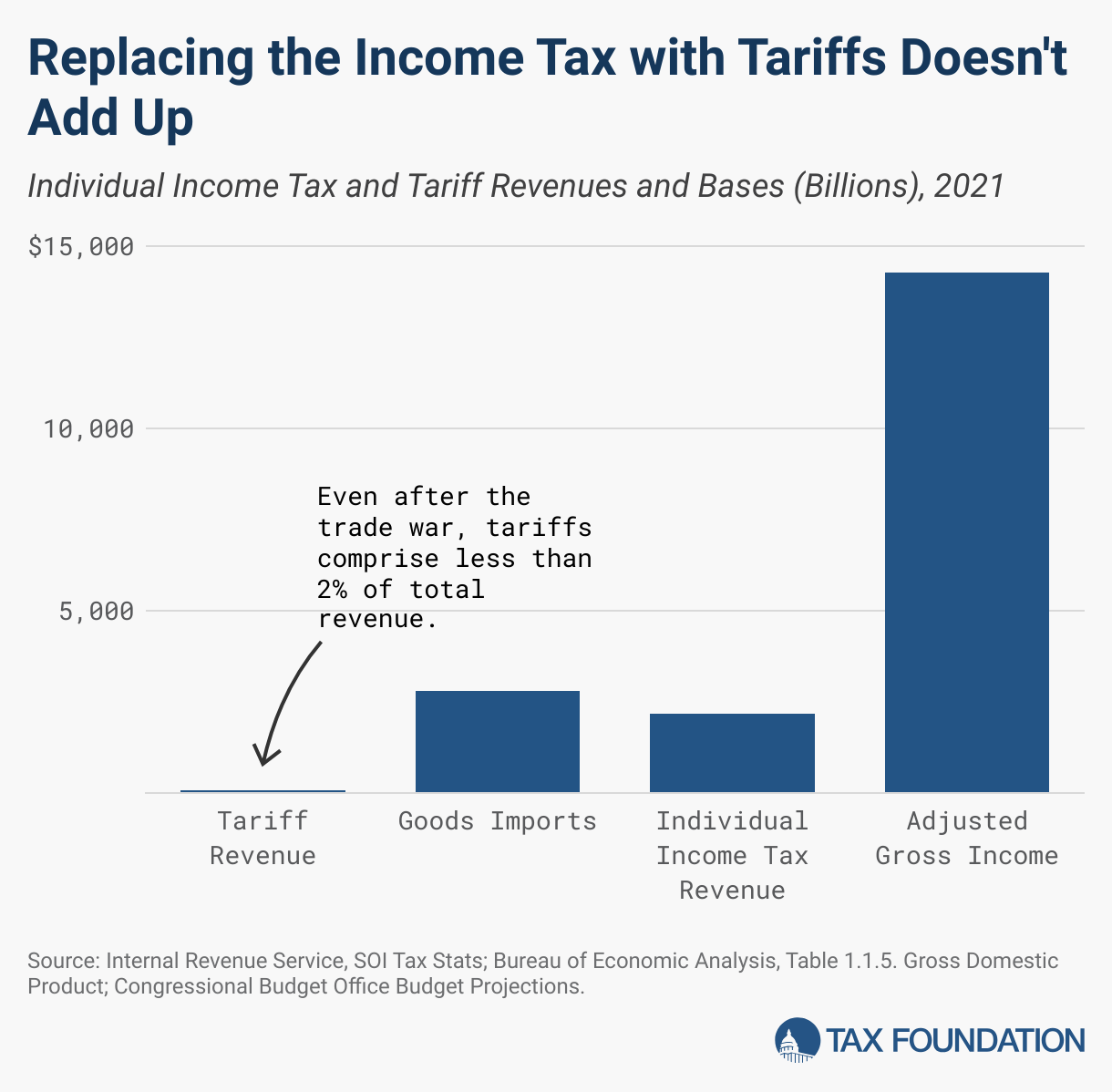
But "turbulence" is a polite word for what is happening in the industrial Midwest and the Sun Belt. Analysis from the Tax Foundation indicates that the permanent Section 232 tariffs (which were not affected by the SCOTUS ruling as they are tied to national security) will still reduce U.S. GDP by 0.2% over the next decade.
The trade-weighted average applied tariff rate is currently the highest it has been since 1972. We are no longer in a "trade war"; we are in a high-tariff era. The Heinrich rebate is a noble attempt to provide a "soft landing" for consumers, but it is a one-time fix for a systemic shift.
The Path Forward for American Families
As the 2026 midterms approach, the "Tariff Tax" is set to become the defining campaign issue. Democrats are already running ads in swing districts, linking the price of eggs and auto parts directly to the Oval Office. Republicans, meanwhile, are caught between a populist base that cheers the "America First" rhetoric and a donor class that is tired of the supply chain chaos.
Heinrich’s bill is currently sitting in the Senate Finance Committee. Its chances of reaching the President’s desk are slim, given the current makeup of the chamber. However, its value is as much symbolic as it is economic. It puts a price tag on the administration’s trade policy: $2,040 per family.
For the average household, the next move isn't waiting for a check that might never come. It’s a return to the "inflation-era" defensive spending:
- Audit Subscriptions: The "hidden" $1,700 often disappears in small monthly leaks.
- Defer Durables: If you don't need a new car or major appliance now, wait. The current legal battle between the courts and the White House means the tariff rates on steel and semiconductors are in a state of flux.
- Support the Exempt: Look for goods produced in countries with active Prosperity Deals (like the UK) that have secured preferential rates.
The era of cheap, frictionless global trade is over. Whether Senator Heinrich can claw back some of those billions for the public is the first major test of whether the legislative branch can still function as a check on economic populism. Until then, the American consumer remains the unwilling financier of a trade war that has no clear end date.
Ask your local representative where they stand on H.R. 7865 before the next round of 10% global duties hits this summer.