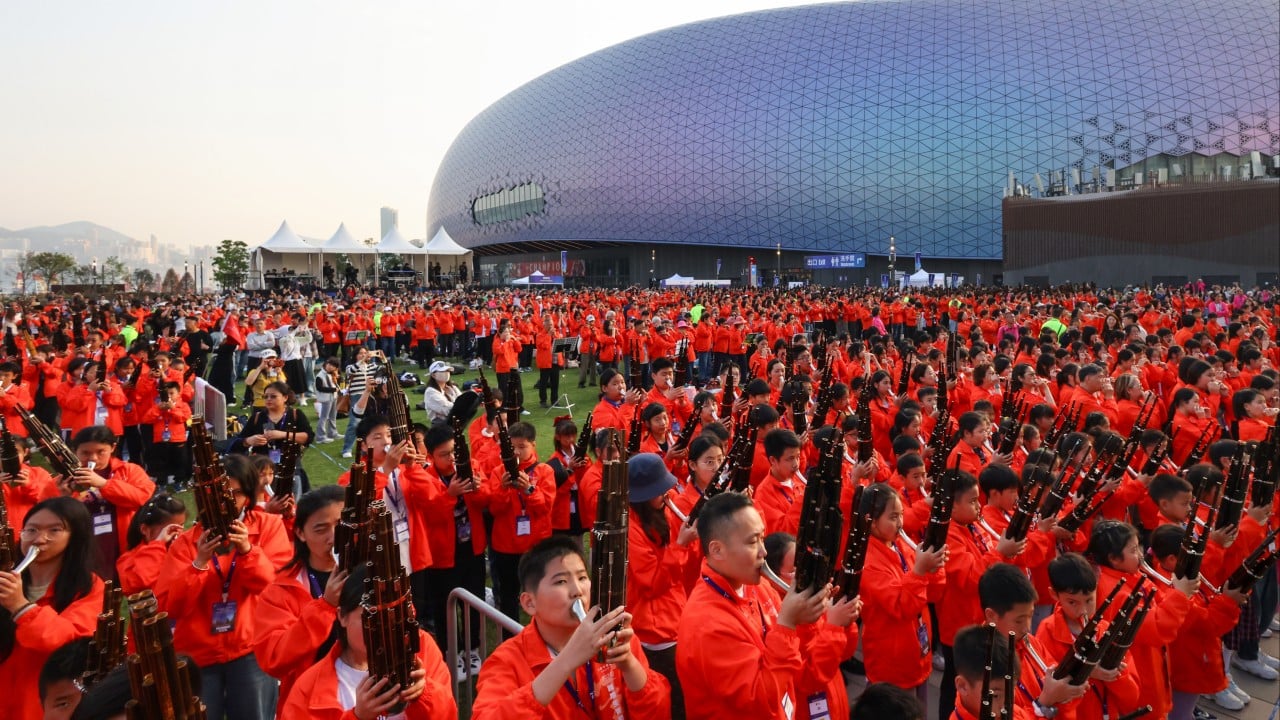
Records are made to be broken, but some are just harder to coordinate than others. When 1,211 musicians gathered at the Hong Kong Coliseum, they weren't just there for a jam session. They were there to dismantle a previous Guinness World Record and prove that massive, synchronized orchestral performances aren't just a logistical nightmare—they’re a cultural statement. Most people think breaking a world record is about raw talent. It isn't. It’s about the grueling, invisible work of synchronization.
The event, titled "The Great Concert," didn't just happen. It took months of planning to get over a thousand people to play the same note at the same time. We aren't talking about a few guitars and a drum kit. We’re talking about a full-scale assault of woodwinds, strings, and percussion. If one person drags the tempo, the whole thing falls apart. If ten people are out of tune, the judges notice. Hong Kong didn't just beat the record; they crushed the previous mark set in Australia.
The Logistics of a Musical Stampede
You can't just invite 1,200 people to a stadium and hope for the best. The sheer scale of this performance required a level of "musical traffic control" that would make a commercial pilot sweat. Every musician had a designated spot. Every instrument had a specific microphone footprint. The Hong Kong Federation of Youth Groups, the primary organizers, had to ensure that the sound didn't become a muddy wall of noise.
The previous record for the largest symphony orchestra was held by 1,110 musicians. To pass that, you need more than just bodies in seats. You need verified participation. Guinness World Record adjudicators are notorious for their strictness. They don't just count heads. They watch to make sure every single person is actually playing. You can't just sit there holding a flute and hope to get a certificate. You have to contribute to the collective sound for the entire duration of the piece.
Why Hong Kong Took the Risk
Hong Kong has always used music as a way to bridge generational gaps. This wasn't a bunch of professionals showing off. It was a mix of students, hobbyists, and veteran performers. That's the part the headlines usually skip. The magic isn't in the number 1,211. The magic is in the fact that a 10-year-old violinist was playing the same sheet music as a 70-year-old cellist.
They chose to play a medley of Chinese and Western pieces. It’s a bit on the nose for a city that sits at the crossroads of both cultures, but it worked. The "Yellow River Cantata" was a highlight. It’s a piece that demands power. When you have over a thousand people hitting those crescendos, it doesn't just sound loud. It feels like a physical force. It vibrates in your chest.
The Technical Nightmare of Synchronization
Ask any conductor about leading a standard 80-piece orchestra. It’s a challenge. Now, multiply that by fifteen. Sound travels at a fixed speed. If you’re sitting on the far left of the Coliseum, you’ll hear the percussion on the far right a fraction of a second late. This is called "acoustic lag," and it’s the enemy of world records.
To fix this, the organizers used a complex monitor system. The musicians couldn't just rely on their ears. They had to rely on their eyes. Large screens displayed the conductor's movements with zero latency. If you listened to the person next to you, you’d be off-beat. You had to trust the visual cue over the audio cues. It’s a counterintuitive way to make music, but it’s the only way to keep a crowd that size from turning into a rhythmic train wreck.
What Most People Get Wrong About Guinness Records
Social media makes these events look like a party. They aren't. They’re high-stress environments. The adjudicators from Guinness World Records don't just hand out plaques because you showed up. They have specific rules for "Largest Symphony Orchestra."
- The instruments must be diverse enough to qualify as a "symphony."
- The piece must be a formal composition.
- The performance must last at least five minutes without stopping.
- Every participant must be technically proficient enough to play the notes.
During the Hong Kong event, stewards moved through the rows. They were checking for "miming." If they caught people just moving their bows without touching the strings, those individuals were disqualified from the final count. The 1,211 figure represents people who actually worked for it.
The Cultural Impact Beyond the Number
Honestly, does the world need another record-breaking orchestra? Probably not. But Hong Kong needed this. After years of social shifts and the grind of being a global financial hub, these events serve as a pressure valve. They remind the city that they can still build something massive together.
The youth involvement was the real win here. Most kids today are glued to screens. Getting 1,000 of them to practice a difficult classical arrangement for months is a miracle in itself. It wasn't just about the five minutes of the record-breaking performance. It was about the hundreds of hours of rehearsal leading up to it. It was about the realization that they are part of something much bigger than their individual practice rooms.
How to Organize Your Own Massive Collaboration
If you’re looking to break a record or just organize a large-scale community event, don't start with the music. Start with the data. You need a rock-solid registration system. You need to know exactly who is bringing what instrument. You also need a venue that can handle the power requirements of a thousand-person setup.
The Hong Kong team succeeded because they prioritized communication. They didn't just send out sheet music and pray. They held sectional rehearsals. They used digital tools to distribute practice tracks. They treated it like a military operation with a soundtrack.
If you want to pull off something similar, focus on these three things. First, find a "hook" piece of music that people actually want to play. Second, invest in visual monitoring so everyone stays on the same beat. Third, make sure your record adjudicator is on-site from the beginning. There’s nothing worse than finishing a performance only to realize you missed a paperwork deadline.
Go find a local group and start small. You don't need 1,200 people to make an impact, but you do need a shared goal. Whether it’s a neighborhood choir or a city-wide orchestra, the effort of synchronizing with another human being is always worth the work.